
I want those things too. But maybe the real problem is the system that treats accountability as rebellion, because when truth is treated like trouble, caring starts to look dangerous.
When accountability is treated like rebellion, what kind of democracy do we really have? We inherit freedoms we didn’t fight for, and sometimes, we’re too afraid to use them.
I’ve never led a chant, never held a placard in the streets, but I’ve felt the fear of those who did. The kind that sits in your throat when you think about marching, when you wonder if caring out loud could cost you something.
Sometimes, I ask myself, bakit nga ba nagra-rally ang mga tao? What’s the point of standing under the heat, chanting until your throat gives up, and being stared at like you’re a trouble? May silbi ba talaga ’to? And if I’m being honest, nakakatakot.
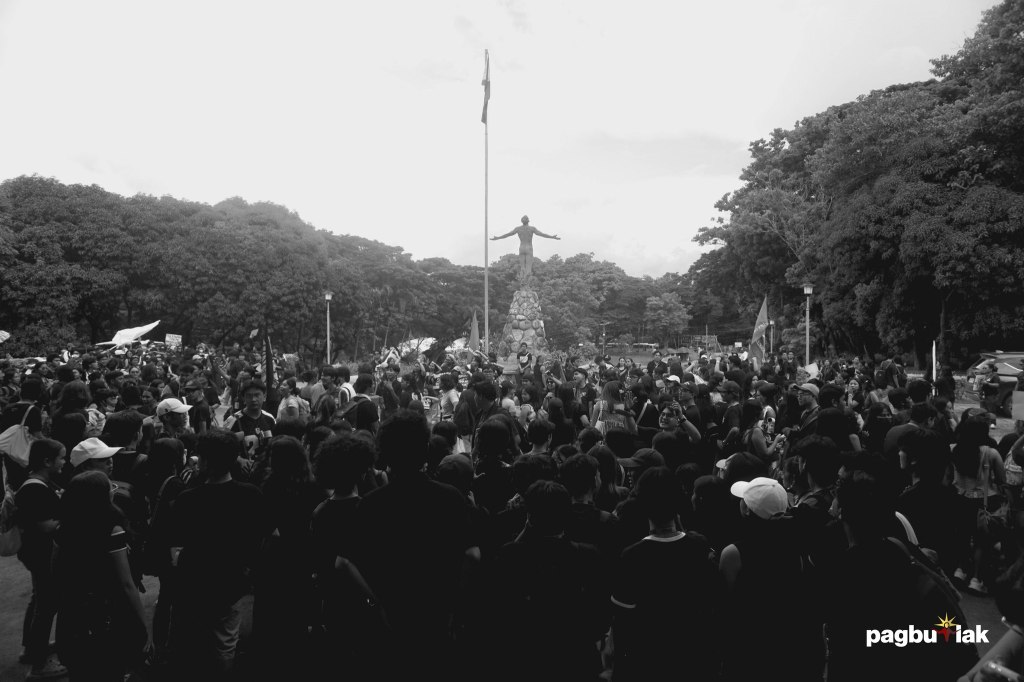
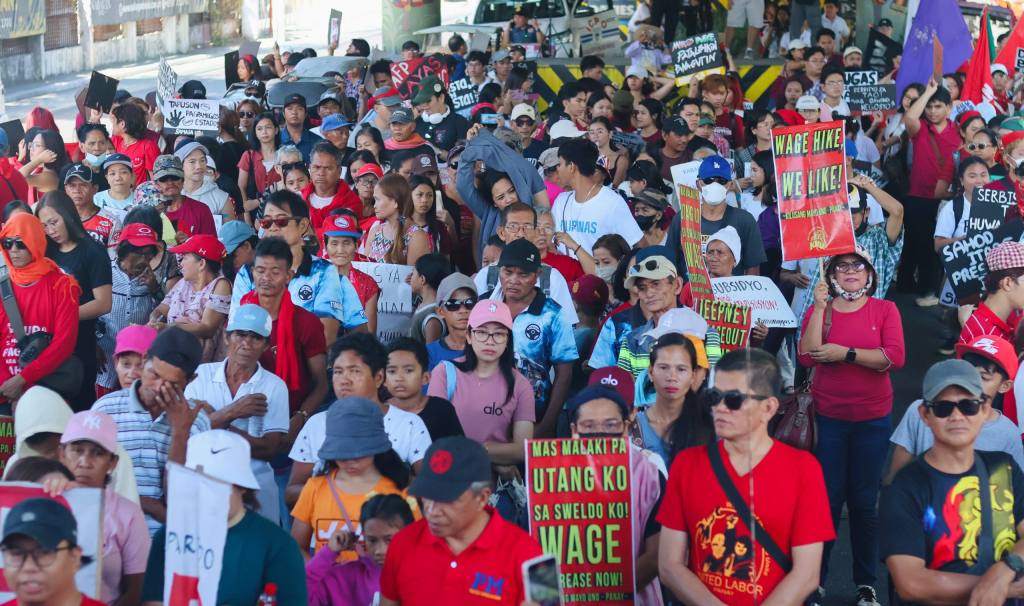
When the Trillion Peso Protest erupted in Iloilo City, I felt the tension even from my hometown. Some friends went. Some backed out. Some pretended not to care, but I saw them refreshing updates on social media. I understood that fear. People still think that joining rallies means you hate the government, but many just want honesty from those who lead, and accountability from those who fail.
I want those things too. But maybe the real problem is the system that treats accountability as rebellion, because when truth is treated like trouble, caring starts to look dangerous.
Fear comes from many places. We fear being red-tagged, judged, or misunderstood. We fear police presence, danger, or being arrested. We fear for our scholarships, our records, our futures. We hear our families say, “Mag-aral ka na lang, huwag ka sumali d’yan.” And deep down, we think, “What if wala namang mangyari?”
Once, I almost shared a post about a politician, but deleted it seconds later. I was scared it might be seen by the wrong people. That’s how fear wins—not by silencing you, but by making you silence yourself.
But fear doesn’t mean we don’t care. Fear means we understand the risks. It means we know what’s at stake. Sometimes, fear isn’t the absence of courage but the first sign of it.
When I look back at history, I realize that the rights we enjoy today were not handed to us—they were demanded by students, workers, and ordinary people who refused silence. Academic freedom, freedom of speech, even the right to vote—none of these came easily. They were won by those who decided that fear was not enough reason to stay home.
That’s why rallies persist across generations. They remind those in power that people are paying attention. They remind us that democracy doesn’t stop inside the classroom. Because if classrooms teach theories, mobilizations and rallies teach consequences.
What happened in Iloilo didn’t stay there. It echoed beyond Panay and reached even those who never planned to march. It made us question our comfort, our fear, and our silence.
Then came the UPV walkout. Eight hundred students left their classrooms together. That moment spoke volumes, that fear remained, but courage moved anyway.
Courage doesn’t always look like leading chants. Sometimes, it looks like learning—asking questions, reading about issues instead of scrolling past them, sharing verified information when lies spread faster, or offering support from the sidelines when your voice still trembles. Even doubting, after all, is already a form of caring.
But caring without action is how silence becomes normal—and that’s exactly what power wants.
Fear protects us—it reminds us to be careful and keeps us alive—but courage moves us forward. It urges us to act even when we’re unsure, to speak even when our voices shake. Fear tells us to keep our heads down, while courage asks us to look up anyway, because we can’t live on only one; we need both.
I’ll admit I’m still learning that balance.
Maybe I’m not always ready to march. Maybe I’m still figuring things out. Or maybe my courage isn’t too loud yet. But I don’t want fear to harden into apathy, or silence to become a habit. I don’t want to pretend I don’t care when I actually do.
Being at this university for three months now, I’ve come to realize that change doesn’t begin with being the bravest person in the room; it begins with being truthful—with acknowledging what frightens us, what truly matters, and accepting that fearing is also caring. What’s important is that, despite it, we still choose to do something, however small, however quiet. Because courage, especially in student spaces, doesn’t always roar. Sometimes it marches under the brutal sun, shouting for what should have been ours all along. Sometimes it signs its name, demands answers, or simply stays to listen. But it never stops caring. And it never stops fighting.
And if there is one thing I am slowly learning, it’s that fear is priceless, but so is courage.
DM Tiangson is a first-year BA (Community Development) student at the University of the Philippines Visayas. He is a probationary opinion writer for Pagbutlak in its 51st year.

 Pagbutlak
Leave a comment