
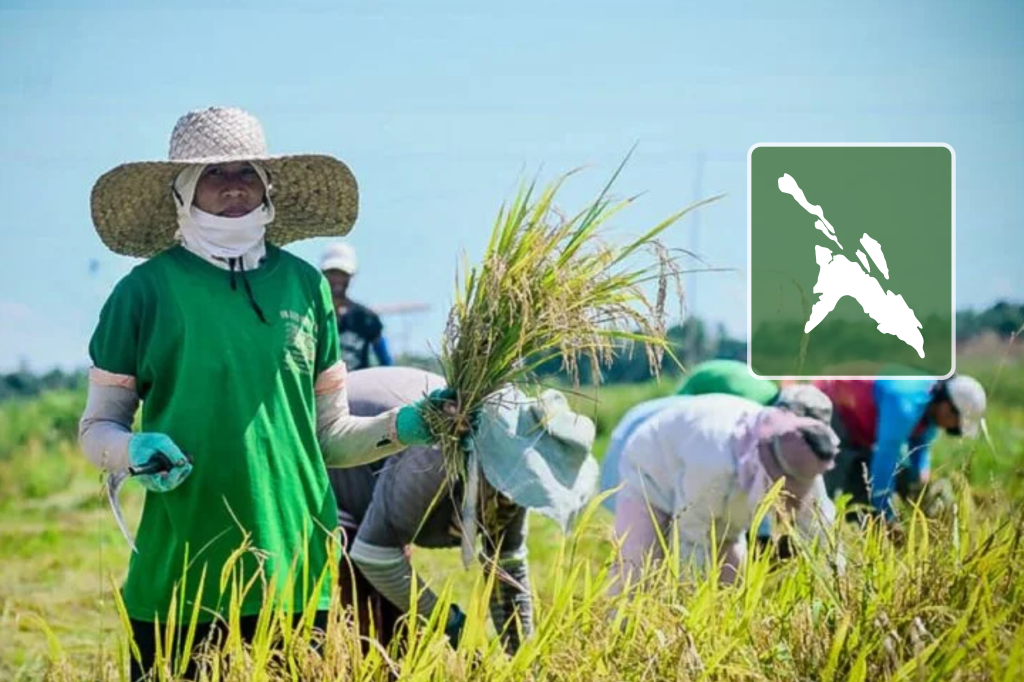
Photo from Bicol Peryodiko
From October 1 to 3, a week shortly after the storm’s landfall in the province, the price of rice was recorded to be as low as six to nine pesos per kilo
The onslaught of Severe Tropical Storm Opong has left Masbate farmers struggling to recover from million-peso agriculture losses, yet they continue to suffer from low farmgate prices.
From October 1 to 3, a week shortly after the storm’s landfall in the province, the price of rice was recorded to be as low as six to nine pesos per kilo.
This is despite the fact that the rice sector was one of the heavily affected, with 487 farmers reporting losses of 256 metric tons, valued at P3.84 million, Department of Agriculture (DA) Bicol information officer Lovella Guarin reported.
Guarin said that 1,394 farmers and fisherfolk in total were affected by Opong, with over 1,000 hectares of farmland devastated. Production loss also totaled to 1,236 metric tons.
The National Irrigation Administration (NIA) also revealed that six communal irrigation systems were damaged, amounting to a total cost of P70 million.
The destruction of the irrigation system directly affected agriculture zones in four municipalities: Baleno, Milagros, Dimasalang, and Cataingan, that rely on the said infrastructure for water supply.
NIA regional manager Gaudencio De Vera revealed that approximately 350 meters of lined canals in the province, including essential irrigation components such as dam aprons, sluice gates, siphons, and intake structures sustained heavy damages.
“This level of destruction poses a threat, as it may disrupt the flow of water to farms during the upcoming cropping season. We are moving quickly to secure funding and deploy repair teams to minimize the impact on local farmers,” he said.
Nothing more to freeze
Adding to the burden of the farmers is the imposed price freeze on all basic agricultural products in Masbate province through the order of the DA and trade and industry department.
The prize freeze order signed on Sept. 29, was issued in compliance with Republic Act (RA) 7581 or the Price Act, mandating an automatic price freeze in areas affected by calamities. Masbate has been placed under a state of calamity since Sept. 28 due to Opong’s devastation.
Sellers in Masbate were compelled to maintain the prevailing retail and wholesale prices as of Sept. 25, the storm’s landfall in the province.
Since the order will remain effective until at most 60 days, farmers will be left struggling to make ends meet despite the impact of the storm on their livelihood, considering the price they sell their rice at.
Call for action
Kilusang Magbubukid ng Pilipinas (KMP) leader Ronnie Manalo, called for the government to provide immediate assistance to help Masbate farmers recover, emphasizing that loans were not enough and that sufficient aid and compensation were necessary.
“Maraming magsasaka ang umiiyak ngayon dahil nasira ang kanilang pananim at mga kabahayan. Nawalan na naman sila ng ani at kita ngayong taon, may utang pa sila. Panawagang mabigyan sila ng agarang tulong upang makabangon muli; hindi sapat ang pautang, nararapat ang sapat na ayuda at kompensasyon,” he said.
KMP also urged the government to address the long-term rehabilitation of irrigation systems, roads, and agricultural properties.
“Ang kabuhayan ng mga magsasaka at mangingisda ang gulugod ng lokal na ekonomiya sa Masbate at dapat bigyan sila ng agarang atensyon at tulong upang muling maibangon ang agrikultura at kabuhayan matapos ang pananalasa ni Bagyong Opong,” the organization added.
Persistent challenge
With many provinces in the Philippines experiencing rice price drop, KMP said that the crisis has persisted since the implementation of the RA 11203 or the Rice Liberalization Law.
“Current farm-gate prices range from seven to 11 pesos per kilo for new harvests and P12–14 per kilo for dried palay, with some areas like Masbate seeing prices drop to P6–8 per kilo after typhoons,” the group said. “This crisis has persisted since the implementation of the Rice Liberalization Law (RA 11203), leaving farmers unprotected from imports and without adequate government support.”
Under RA 11203, the rice trade was liberalized to allow unimpeded imports, a policy that farmers’ group say has driven down local palay prices and pushed small producers deeper into debt.
KMP also slammed the administration’s P20-per-kilo rice caravans, calling them a ‘publicity stunt’ meant to deodorize the regime’s corruption instead of addressing the roots of the rice crisis.
In Masbate, the government’s rollout of the P20 rice program has highlighted the contrast with the realities faced by farmers still reeling from crop losses and falling prices.
Benedict Maravilla is a sophomore Public Health student under the Division of Biological Sciences. He has been writing news for Pagbutlak since the academic year 2024-2025.



 Pagbutlak
Leave a comment