
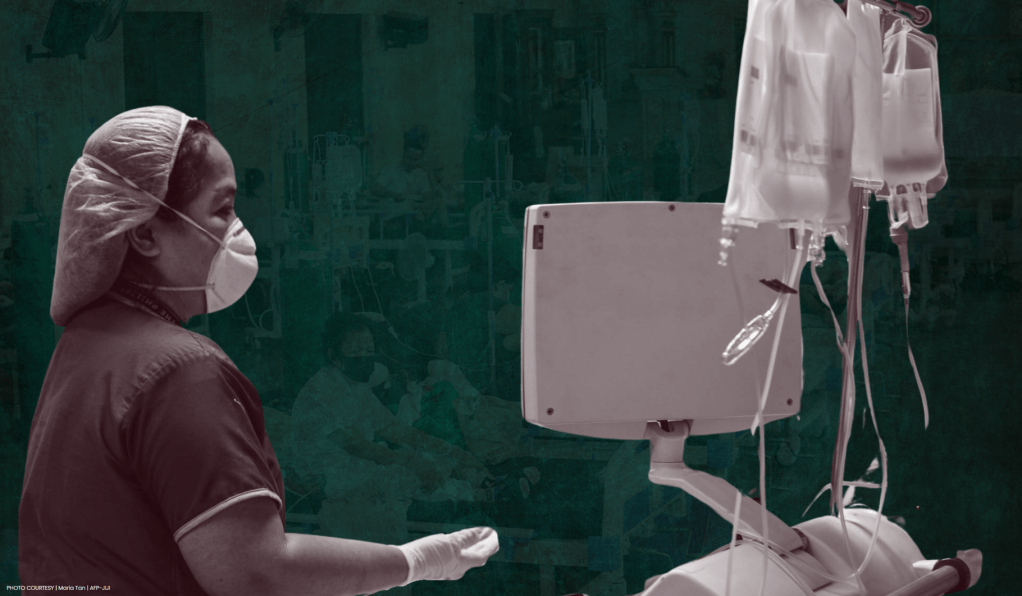
Accessing health care is not only a problem of access, but the quality of care it can offer once people reach these facilities.
Siegfred Paul Magbanua, a resident in Miagao, vividly recalls the challenges with his family in accessing medical treatment. His father passed away after being hospitalized for a month, with his diagnosis, Pott’s Disease, becoming clear along with other complications only after his death.
He lives in Malagyan, a barangay located within the Poblacion area. His home is relatively advantageous since he can easily access the nearest healthcare facilities. The Miagao Municipal Rural Health Unit and the University of the Philippines Infirmary are the only general clinics available in Miagao.
While the Miagao RHU caters to the public residents of Miagao, UPV prioritizes the UPV Community. Hospitals are nonexistent— they must travel to Guimbal, a neighboring municipality, especially for more specialized care.
In a 2020 census from Philippine Statistics Authority, Miagao boasts a population of 68,000 people with 119 barangays. Henceforth, there is one health worker for every 5,000 residents. It is far-fetched from the recommendation of the World Health Organization (WHO) that signifies that there must be 4.45 health workers for every 1,000 residents to ensure sufficient healthcare services.
Despite being the municipality with the biggest number of barangays, totaling 119, in the Philippines, the absence of a hospital and the current health worker-population ratio show how disproportionate it is to cater to the healthcare needs of the Miagaonons.
The struggles of Siegfred are not an isolated case to most of the population in Miagao. The reality is in consonance with the order of the Republic Act No. 11223, supposedly mandating the government to ensure that Filipinos must attain the healthcare they need anytime they prefer, without getting any barriers that are out of their control.
Accessing basic healthcare services has been a struggle in the rural areas because of socioeconomic, if not systemic, barriers.
For urban areas in Iloilo like in Iloilo City, it relatively enjoys quicker access to a wide range of healthcare services from specialists, hospitals, and to more equipped facilities. The differences are blatantly glaring.
Guimbal Hospital as a Stopgap on the Clinics’ Precarious Conditions
The general clinics in Miagao cater only to general medicine, hence they can only accommodate common illnesses.
In Miagao Rural Health Center, there are 6 doctors and 9 healthcare staff. In UPV HSU, there are 6 doctors and 7 healthcare staff. Both health centers can’t cater to higher level care. People travel to the city for more specialized treatment, a case in point for Siegfred himself who travels from Miagao to Iloilo City to seek treatment on his heart issues.
“There are ambulances that could take the patients to the neighboring town hospitals,” he shared. “However, they are not fully equipped for a lot of emergency situations. In other grave cases, the neighboring hospitals send the patients to other hospitals in the city for more intensive care.”.
Miagao Rural Health Unit (RHU) provides essential but limited services such as animal bite treatment, dental and medical care, basic surgeries, and prenatal care. Similarly, the UPV Infirmary extends its reach providing preventive care and laboratory services, yet its limitations are evident; adding the fact that it usually prioritizes the UPV Community only.
The shortfall to the logistical and financial resources for residents with serious medical conditions.
During a disease outbreak like dengue, Siegfred observed that the Rep. Pedro G. Trono Memorial Hospital in Guimbal could get overcrowded. It provides inpatient care from Guimbal, Igbaras, Tubungan, Tigbauan, Miagao, and even San Joaquin.
Those with chronic conditions, the elderly, and the children are the most vulnerable in this kind of healthcare system.
As they resort to Guimbal Hospital for intensive care, Siegfred’s father and his caretaker, who happens to be his aunt, were still uncomfortable in the hospital of Guimbal because of the lack of utilities and equipment.
The collective emotional strain of Siegfred’s family due to discomfort and delays, even in the hospital of Guimbal, is a manifestation of a larger systemic issue in rural health care across Iloilo.
Even if facilities exist, it does not accordingly accommodate the influx of patients or provide the necessary care especially on complicated illnesses. Henceforth, the hospital in Guimbal only became a stopgap and not the solution to the problem.
Accessing health care is not only a problem of access, but the quality of care it can offer once people reach these facilities.
Siegfred affirmed that he is constantly facing frustrations every time he seeks medical care. There is a constant uncertainty whether their efforts, especially the amount of money taken out, in visiting the clinic or even the hospital will get positive outcomes on their conditions or merely complicate their health challenges.
Privatization of Healthcare Becomes Unfavorable
Even if the consultation is free in public clinics, the recommended medicines for further treatment or maintenance are not. The cost associated with preventive care and primary care most often impedes the people for further medication.
Even for middle-income families, they resort to debt from any person they can approach especially if it requires long-term medical treatments.
“Coming from a lower-middle-class family, hospital bills, medicines, etcetera, are expensive for us — sometimes making us borrow money from other people. I have observed that it is extremely hard for the elderly.
Despite the senior citizen discount, we still spend up to PHP 10,000 from diapers and medicines for my grandmother, not including the PHP 2,000 from her milk alone.” Siegfred manifested.
Siegfried also shared that they did all the means to seek for financial aid including approaching politicians like Mayor Richard Garin. There was also the time when he spent all his academic allowance from the Department of Science and Technology to help lessen the medical expenses of his family.
The disparity between the rich and the poor is a manifestation that healthcare in the Philippines is not accessible to most of the Filipino people, it became a privilege of the few. After all, it is commercialized. Those who can afford are the only ones who can easily access it.
The Demand for Universal Healthcare Continues
Accessing healthcare services extends beyond whether one can acquire it regardless of the process, but also concerns how it can improve the health conditions of the Miagaonons long-term.
We cannot blame the clinics for the limitations of their facilities and services, since they are only maximizing their limited budget. Similarly, Miagaonons cannot be blamed for the dissatisfaction in seeking healthcare services. This collective hardship is rooted from the lack of budget allocated in the health sector, especially in rural areas like Miagao.
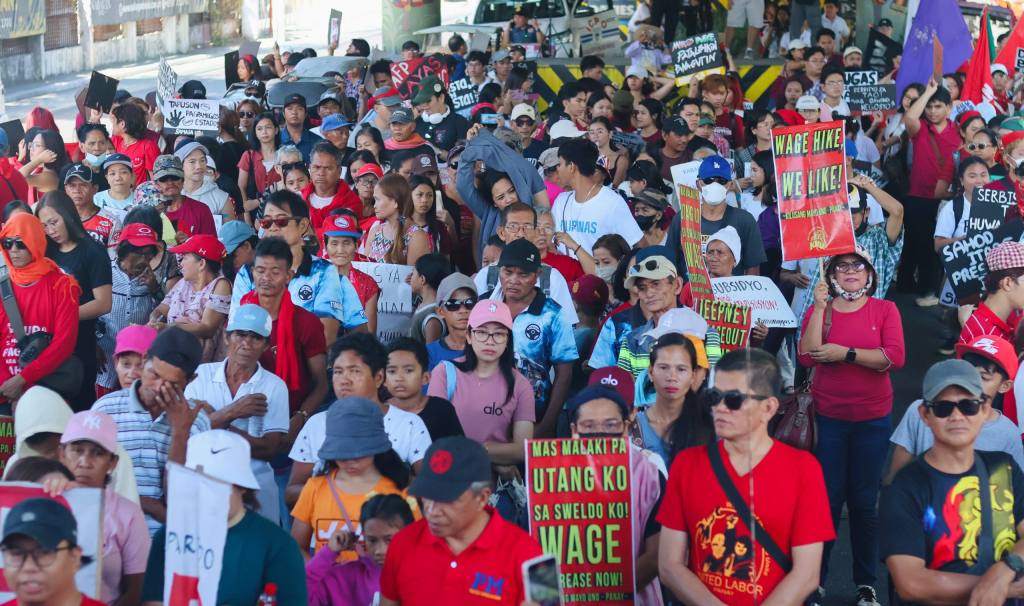
The Miagaoanos can only advocate for universal access to healthcare, reducing the barriers in accessing it by the government ensuring an adequate infrastructure and health facilities among municipalities. This is closely tied to the call for a greater wage for our health workers regardless of its location, in hopes to address the shortage of health workers especially in rural areas.
Last August 2024, the Department of Budget and Management announced through a press release about the government’s resolution regarding Executive Order No. 64 or Updating the Salary Schedule for Civilian Government Personnel and Authorizing Grant of an Additional Allowance and for other Purposes. It entails a salary increase of 530 pesos from the minimum salary grade of 13,000. With health workers having a minimum wage of 13,000 pesos per month under the salary grade system, it only makes it 13, 530/month today.
If we try to divide the wage increase, it only has 24 pesos increase per day. The overall wage of healthcare workers does not even reach half of the family living wage in the Philippines, as per the findings of Ibon Foundation, that is Php 1,100/per day or Php 33,000 per month.
With the aforementioned concerns, establishing a general public hospital in the municipality of Miagao may be ambitious or idealistic in light of the current state, but it is merely addressing the material conditions of the municipality. A lot of systemic change, therefore, must be actively struggled: national minimum wage, free medications, establishment of more advanced health facilities, and ultimately an increase of funding to health services.
With these calls, tensions may arise as the interest of private healthcare will be in peril because of profit concerns, but in governance, the critical question remains: “for whom are we making decisions?”
Siegfred’s experience encapsulates the urgent need for systemic change in healthcare provision—not just in Miagao, but across the Philippines.
Who will be left behind? Without systemic change—for as long as medicines are commercialized, for as long as there is no hospital nor enough health workers to cater 68,000 Miagaonons, the cycle of inequitable access to healthcare services continues and it will never end. The elderly, children, and those with chronic conditions will be left behind.
This is one of the fundamental human rights the people of Miagao are denied. How many more families like Siegfred must endure in the current healthcare system?
Francis Marie Lapingcao is junior Communication and Media Studies student at the Division of Humanities. She is a senior writer for Pagbutlak, reporting on human rights, women, and marginalized communities. She is also currently serving as the Education and Research Officer of the UPV Oikos Ecological Movement.


 Pagbutlak
Leave a comment