
Trigger Warning: This article makes references to and mentions violence and rape
“Alam mo kasi, if you have a sense of history, makikita mo na ang Filipino people, mula’t sapul ay lumalaban. Kaya lumaban nga sila eh. Ilang beses rin naman tayong nanalo. Tapos matatalo ulit. Mananalo na naman, matatalo, mananalo.”
“Kahit sa pangatlong ikot, isa ang amoy ng rehas – amoy tibay at dugo ng pagpupumiglas” — from the song “Adora” by Tao ng Bandang Oriang
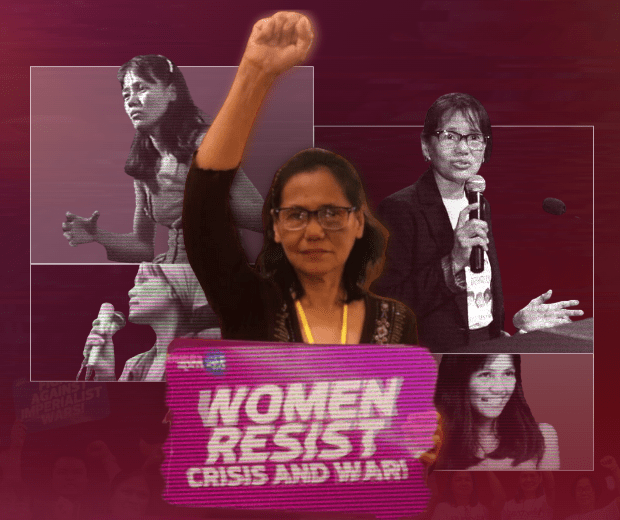
The strength forged from struggle remains, even after Adora Faye de Vera’s third confinement at the age of 69. She was illegally arrested four times as a political prisoner under the administration of two Marcoses. The court has dismissed her case, affirmed her innocence, yet compounded the injustices she endured. For Adora, there is no place to retreat, only to carry on—just as countless Filipino women before her have shown in the ongoing struggle for a just and lasting peace.
Qualitative Leaps
Adora, born from a middle-class family, is a bright student who studied at Philippine Science High School. Even back then, she was already advocating for students’ rights and welfare, clamoring for better facilities in their university. Their campaign did not go unnoticed— their school administration took action to resolve their clamor.
For all that, while clamoring for additional facilities, it was unforeseen to come at the expense of an urban poor community near their school. She could not, in good conscience, allow homes to be demolished for a mere construction of an additional building.
The juxtaposition between the urban poor community and their condition marked the first leap of her political awakening. Adora affirmed, “Kasi sa school napaka privileged namin, may mga allowances kami, libre ang books. Napakataas ng standard ng skwelahan tapos ilang hakbang paglabas, nandoon na ang mga bata na hindi makapagskwela.”
She consequently joined the barricades. They fathomed that the issue of demolition is not confined to the case of their school— demolitions were occurring throughout Quezon City. She visited urban poor communities to further learn about their struggles. In those times, she volunteered to teach literacy and numeracy to children who could not afford to acquire formal education.
They had successfully defended the land even until the first year of martial law. They even got a moratorium from the city mayor to stop the demolition of other communities. But the conflict got tighter, the local residents eventually got evicted. The construction of the additional building pushed through. There were no more residents who were supposed to inhabit the area, in the place where the malls Vertis and Trinoma now stand.
She became more radicalized by the harsh realities outside of her school. Adora had two choices: to continue pursuing her bourgeois career aspirations or to do political work to mobilize people against many forms of social injustices in the country. Her condition, especially in the peak of martial law, gave her one: to join the struggle of the toiling masses.
Persisting Under the Shackles of Marcos Sr.’s Administration
During the pronouncement of Martial Law, organizations and even gathering as a group was prohibited. How could they resist without breaking through anti-democratic regulations? It was an automatic decision for her to go underground and continue her political work as an activist. She became a member of MAKIBAKA, a nationalist revolutionary women’s organization founded in April 1970.
“Simple lang naman ang ginagawa namin noon. May mga lightning rallies just to show na hindi tulog ang mga tao eh. Na hindi basta-bastang magagawa na legal yung gusto nilang gawing violence.”
In one of the lightning rallies, she was arrested for displaying propaganda posters. She was still seventeen years old at that time so she could not be jailed. She was only placed under house arrest, where her dad was required to report to Camp Aguinaldo every two weeks. Breaking through from military intimidations, she managed to escape at their home and continued organizing underground.
Three years later, she was abducted while doing organizing work in Southern Luzon. She was transferred to a safe house and was raped by military men whose aim was to extract information. For almost nine months, she remained a desaparecida— was subjected to brutal torture and rape, until she was surfaced only to be in prison again after five years, this time with a price on her head for reporting the torture to the Amnesty International.
Standing her ground, in 1986, she was among the ten plaintiffs from Samahan ng mga Detainee Laban sa Diktadura (SELDA) to file a lawsuit at the U.S District Court in Hawaii against Marcos Sr. in pursuit to get justice from the human rights abuses in his administration. The U.S court ruled that the former dictator was guilty for the violations and is liable for his damages.
Fighting Beyond Hope
When asked how she was able to continue being involved in the mass movement, her answer is simple— people’s struggle is dialectical. There is conflict, hence there is resistance. Most importantly, because she has nothing to lose.
“Alam mo kasi, if you have a sense of history, makikita mo na ang Filipino people, mula’t sapul ay lumalaban. Kaya lumaban nga sila eh. Ilang beses rin naman tayong nanalo. Tapos matatalo ulit. Mananalo na naman, matatalo, mananalo.” Adora explained.
She hopes to pass this legacy to the current and next generation of nationalist Filipinos. “Tinortyur na ako, muntik na akong pinatay. Nadisappear na yung asawa ko. Pati yung tatay ko nakulong. Bakit pa ba ako titigil?” she added, affirming her resolve to continue fighting amidst the state-sponsored violence she endured.
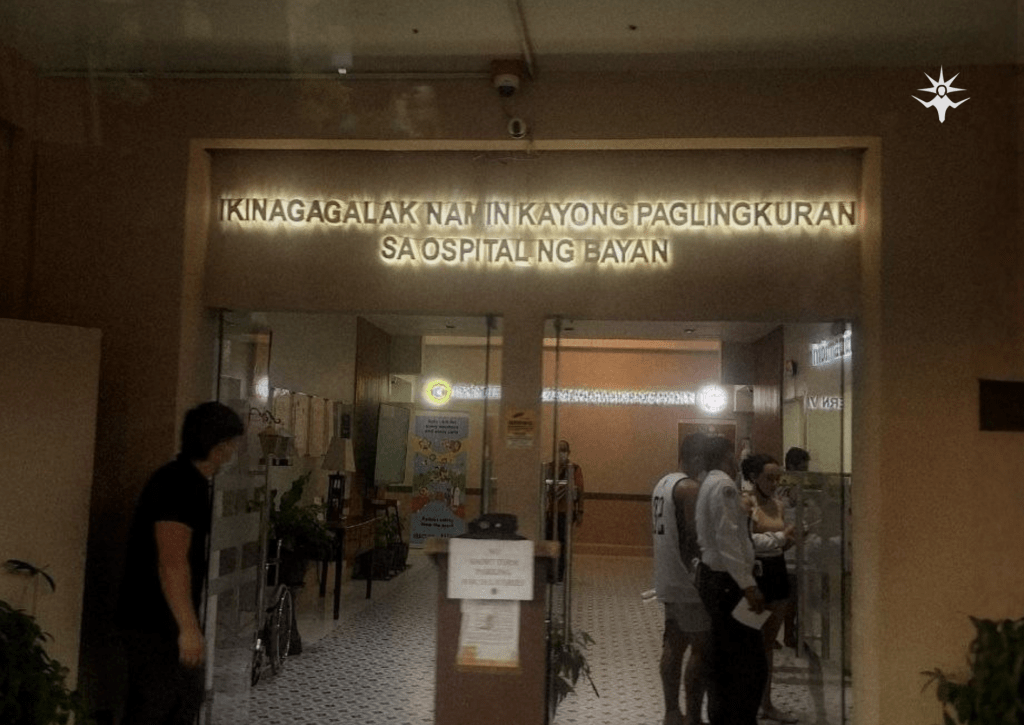
On her third arrest, where she was imprisoned in a special security facility at the penthouse of the AFP Medical Center, a high-ranking military officer approached her and offered that if she recanted her statement and apologized to Marcos, she would be released.
She questioned and refused, “Samantalang ganon, sinira niya na ang pamilya namin. Ang anak ko itinakbo ng family ko– natakot. Hindi niya ako nakilala. Nagkakilala kami malaki na siya. Natakot sila dahil wanted nga ako, dahil inexpose ko ang pag torture sa akin. Tapos may mga nagsasabi sa akin na bawiin ko daw ang pag expose ko. Bakit ko babawiin?”
Adora observed that we have but one life to live. One day it will end, may it be through anything that is not expected. The crucial question remains: what role have we done in attaining genuine liberation? Which side of history were we supporting before our death?
Perils on the Path to Freedom
Adora is now staying in Manila under a therapy because her health conditions worsened during her fourth stay in prison in Iloilo, where she was brought far away from her home. Most of her time is spent on writing. However, up to now, she is still red-tagged in Iloilo.
When asked how she coped with the risks of being an activist, she explained that danger is omnipresent and being silent does not exempt anyone from safety.
“Alam mo noong nakulong ako, yung second arrest, nandoon ako sa loob ng safe house. May nakita ako doon na hinuli na hindi aktibista, napag-initan lang ng mga military. At tsaka ngayon, nakita natin yung mga tintokhang. Hindi naman mga pusher, kundi mga user lang— pinapatay. Ibig sabihin kahit nasaan ka, nandiyan ang danger. So kung tatahimik ka lang, hindi guarantee na hindi ka maano. Imbes na manahimik ka, magtago, matakot, humarap ka nalang. Diba? Isa lang buhay natin eh, sasayangin pa ba natin sa takot?” Adora stated.
Moving Forward
Adora is optimistic with the new generations of activists to come and hopes for them to fight and gain enough courage especially with the current situation’s heightened militarization and historical revisionism.
While she acknowledges that standing for what is right is a simple thing to do, it often brings danger to one’s life. Yet, to live in fear is what the oppressors want in the first place— for us to bow down and cower. And so if we submit to their will, we have no political gains that would free us from the chains of systematic abuses.
She manifested, “Kahit mamatay ka pa, kahit matortyur ka pa, hindi ka nag-iisa eh, madaming ibang ginagawa na ganun eh. At kung tinotortyur ka na nga, dapat ka bang susuko? Dapat nga lalo kang tumatapang.”
She challenges the youth of today to continually integrate in the basic masses— in the factories, urban poor communities, and peasantry. Most especially, to break from individualistic tendencies— the tendency to look only for ourselves with little regard to others.
“Ang Pilipinas ay isang community na sa mahabang panahon ay tulong tulong— bayanihan. Pero totoo yun eh, nagtutulong tulong ang mga Pilipina. Wag nating balewalain yun. Gawin nating positive ang pagtutulungan para ang lipunan ay magbabago, para ang lipunan ay mas maging mabuting lipunan para sa lahat.” Adora said.
According to Karapatan, there are 755 political prisoners as of June 2024, 145 of which are women, awaiting acquittal from false charges under the country’s delayed due process. Despite the release of some, just like Adora, none of the penetrators of these crimes are held accountable.
During these undeniably tough times in our history, learning this testimony from Adora reminds us to fortify ourselves in the struggle and continue to fight— to carry on even beyond the bounds of hope.

Francis Marie Lapingcao is junior Communication and Media Studies student at the Division of Humanities. She is a senior writer for Pagbutlak, reporting on human rights, women, and marginalized communities. She is also currently serving as the Education and Research Officer of the UPV Oikos Ecological Movement.



 Pagbutlak
Leave a comment