
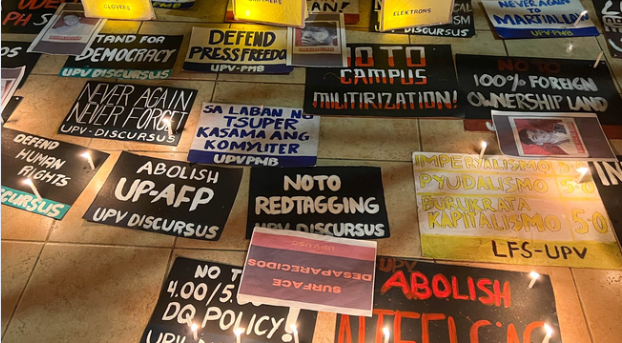
The admin cannot afford to be a silent spectator while the academic freedom of its students and faculty hangs in the balance. We not only demand a strong and proactive stance from the admin, we expect it at the soonest possible time.
The recently inked Declaration of Cooperation between the Armed Forces of the Philippines (AFP) and the University of the Philippines (UP) on August 8 stirred a storm of controversy within the UP community. Though both the AFP and the university administration framed it as a beneficial collaboration to bolster national security and advance academic growth, its underlying threats to UP’s decades-long, fiercely defended academic freedom cannot be ignored.
At first glance, the declaration holds promise, as touted by the administration for its supposed benefits. Such an alliance, they claim, will align resources to influence our state security reform to be guided by academic rigor through “joint academic programs and research initiatives.” Additionally, the administration claimed that it would also serve as a stepping stone to resolve the long-standing issues that have persisted between both parties.
However, the shadow of red-tagging and campus militarization looms large, much like a persistent stain. The UP community does not forget the AFP’s role in its relentless targeting of faculty and students with false subversion claims and profiling. The fear is that this agreement will only exacerbate the already hostile environment against student activism and academic freedom. Allowing state forces to have a presence within UP’s bounds would pave the way for vulnerabilities to dangerous allegations, smothering the university’s tradition of activism.
More alarming is the nature of this declaration—one made behind closed doors and with no prior consultation. Had it not been for the AFP’s careless oversight in prematurely posting the agreement on social media, the UP community would have had no awareness of the agreement’s existence. The lack of community input and transparency regarding such a significant decision reveals the type of governance the university has under President Angelo Jimenez.
The trajectory of Jimenez’s leadership is becoming much clearer, marked by an unsettling coziness with state forces. Under his reign, the voices of the constituents he serves take a backseat to outside military interests, as his administration remains silent on the restoration of the 1989 UP-DND Accord. Not even the bare minimum has been met, as his administration has yet to show signs of addressing the incessant red-tagging of UP students and faculty.
In the face of all this, the UP community remains vocal in its opposition. At the recent 57th Convention of the General Assembly of Student Councils (GASC), the clamor for the nullification of the agreement gained further momentum as student leaders and campus publications from across the UP System continued to condemn the lack of consultation and the threats posed by the agreement. Organizations such as the newly reinstated Defend UP Network vow to carry the voices of the community, determined to prevent UP from devolving into an appendage for state forces’ agendas.
At UP Visayas, the stakes are even higher. Student activism, a proud tradition of the university, has been relentlessly attacked with baseless accusations, red-tagging, and state-sponsored fear tactics that have created an atmosphere of constant anxiety. Students face not only the threat of surveillance but the looming specter of police and military intrusion—threats that extend beyond campus grounds and into the community itself.
And Chancellor Camposano, a proud advocate of academic freedom, has done and said nothing about the danger of the UP-AFP Declaration of Cooperation. He stands by as students, faculty, and organizations fight tooth and nail to protect the freedoms the university claims to uphold. Instead of fortifying its defenses against state interference, the administration’s complacency invites it, just like how he welcomed the NTF-ELCAC into the University on his first term as Chancellor. Anything less is a betrayal—not just of the UP community, but of the Iskos who have bled to make UP a bastion of activism and critical thought.
Now is not the time for half-measures. The UP Visayas administration must join the clamor and actively engage with students and faculty to protect the university’s academic freedom. Just as the UP Diliman University Council has boldly taken a stand, it is crucial that the UP Visayas, through Camposano’s leadership, does the same by demanding immediate action to nullify the UP-AFP Declaration of Cooperation. The admin cannot afford to be a silent spectator while the academic freedom of its students and faculty hangs in the balance. We not only demand a strong and proactive stance from the admin, we expect it at the soonest possible time.
Ultimately, this Declaration of Cooperation is more than just a beneficial academic partnership—it sets a precedent for the erosion of UP’s hard-won autonomy. President Jimenez, and UP Visayas Chancy too, must remember the values upon which the university was built: dissent, independence, and critical thought—the very same values that constructed barricades on the grounds of UP Diliman against Martial Law’s tyranny.
May the persistent ink stain that marks their hands from signing this agreement serve as a reminder that, no matter how much they wash it, their hands are not clean. Ink may dry, but marks remain—UP must and shall always remain a bastion of activism and free thought, unstained by external forces.
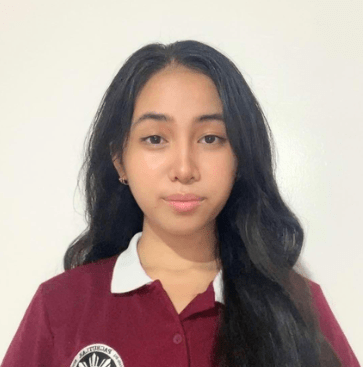
Mariella Villodres is a sophomore of BS in Applied Mathematics at the Division of Physical Science and Mathematics. She writes features for Pagbutlak since 2023, and will serve as its 50th Associate Editor for the Academic Year 2024-2025.



 Pagbutlak
Leave a comment