
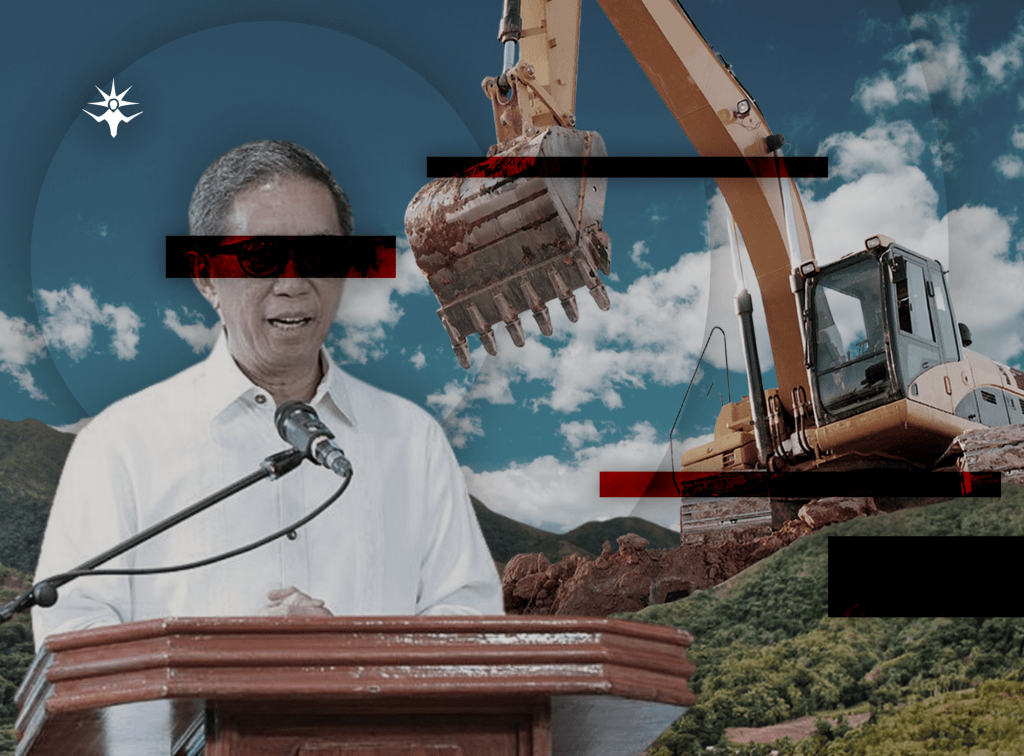
Graphics by Klyde Danielle Factes
Antique, like a mother in a society that takes for granted her labor and autonomy, is both enduring and suffering. She lies waiting for her children—communities, governments, and prodigal sons alike—to come back to her, fight for her, to stand with her before the storms return.
Since time immemorial, Antique has always stood as a mother to her people. Her spine is the great mountain ranges of Central Panay where each arched slope bears centuries’ weight of storms. But, even as she was able to brace against the turning of time and thrashing of tempests—against even the betrayal of some of her children—she’s now only barely holding on.
With shoulders draped in the forests of Sibalom and Valderrama, she embraces the Iraynon-Bukidnon tribe in the shade of her canopies—their prayers rising with the morning mists of her breaths and returning as the midday rain. From her peaks, pour rivers like milk down into rice paddies.
There, where her skin is soft and fertile against calloused hands, a farmer bends low, hands caked in soil, planting rice to feed their family. At the same time, in the cradle of the Sulu Sea, a fisherman’s sweat mingles with her brine—both mother and child laboring. And in her coves and coastlines kissed by the dawning sun, lie fishing families in wait.
But the hands that once caressed her soil, cast nets into her tides, and bowed in reverence for her blessings, now cling to what remains—some even turning to tear at her flesh. Because even in her gentle nurture, human ambition has learned cruelty.
Roads are carved through her ridges. Machines strip her off her forests. Mining drills pierce fractures into her spine—splintering her rivers that once pumped life to her lands. Her bosom is now bare and her creeks are now marred in state-sponsored corporate greed.
Antique, like a mother in a society that takes for granted her labor and autonomy, is both enduring and suffering. She lies waiting for her children—communities, governments, and prodigal sons alike—to come back to her, to fight for her, to stand with her before the storms return.
Carawisan:A Canary in the Coal Mines
In San Remigio, lies a tributary of the Sibalom River watershed called the Carawisan Creek. What once was alive and flowing is now a bare bed smothered under ten-feet deep mining waste, poisoned beyond recognition.
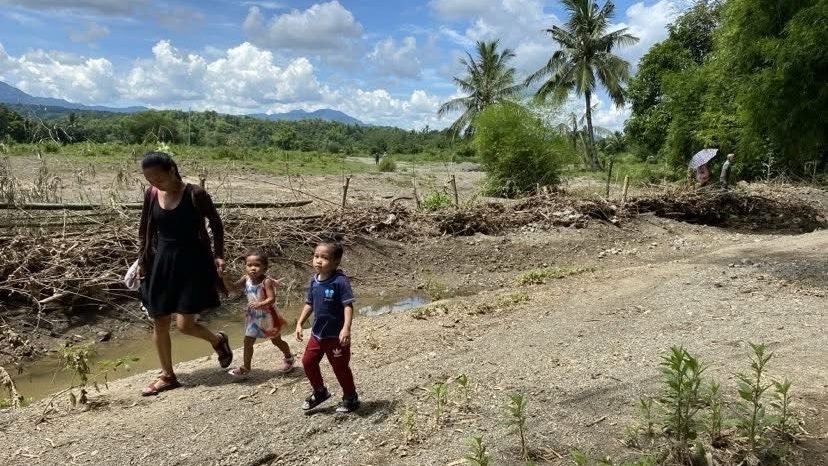
“Ang sapa kang Carawisan natabunan kang mga basura kag dali magbaha rudya”, laments farmer Bernie Valente, president of the Carawisan II Farmers and Irrigators Association.
Even when the mine closed, the land still remembers it violence. With the creek choked and twenty hectares of fertile farmlands lie ravaged, the people can only cling to what once was. Farmers such as Bernie can only press their hands to where clear current used to run, experiencing in memory only the freshness of clean water and the sounds of carabaos splashing about.
It was a destruction heralded by the Emerald Mineral Resources, who to this day remains held unaccountable for their illegal use of heavy machinery, illegal logging, and open-pit stripping—for tearing San Remigio apart.
Carawisan is not just a scar on Antique’s landscape—it’s a warning. It’s the canary in a coal mine, ringing the alarms. Every slope stripped bare, every creek clogged, is a death sentence when the storms come. And for the locals, the fear is visceral.
They remember how unstable slopes collapsed under 2008’s Typhoon Frank. They remember how they buried neighbors and families after Typhoon Paeng’s flash floods in 2022. Yet today, in the very same fragile watershed, DENR’s Mines and Geosciences Bureau is poised to declare a 3,700-hectare mineral reservation—opening the land for more extractive exploitation.
“We are rebuilding the same conditions that killed our people,” warns Amlig Antique Alliance, a coalition of faith, academe, and civil society organizations working against the destruction of Antique.
The Silence of a Son
In the whirlwind of this all, stands DENR Secretary Raphael “Popo” Lotilla, who is not just a random out-of-touch bureaucrat flown in from far-off Manila—but Antique’s very own son.
Lotilla was born and raised in Sibalom, a town just downstream from the Carawisan creek. As a boy, his childhood would have unfurled alongside the river that once ran clear, feeding the farms and forests that shaped his community’s way of life.
Now, as the DENR Secretary, he carries the constitutional mandate to protect our nation’s environmental integrity. More than just abstract policy, this is now personal—a question of ancestral responsibility. With his family’s roots stemming from the same soil now threatened by extractive greed, his fellow Antiquenos ask: will he honor or abandon the very land that raised him?
The Amlig Antique Alliance, frames this as a covenant. “When history asks what the son from Sibalom did when Antique cried for help, may your answer echo Christ’s words: I have come that they may have life, and have it abundantly.”
That “life”, they insist, cannot mean poisoned rivers, fractured mountains, or displaced indigenous peoples.
Because nothing can be more deafening than a mother’s cries of distress while her son presides in silence.

From Mountains to Coastlines
Antique’s body is not the only one cut open. From Sierra Madre all the way to Mindoro, forests are uprooted, rivers dammed, and creeks destroyed. Antique’s afflictions echo a nationwide pattern of desecration and hers extends far beyond mining and deforestation.
Her fragile mountains that are a part of the Central Panay Range are not only at risk of mining’s destruction. The DPWH’s Panay-West Lateral Road project seeks to carve roads on her slopes, an infrastructure with questionable ecological and practical merits. It’s being spearheaded by Sunwest Corporation, a construction company that’s co-founded by Ako-Bikol Representative Elizaldy Co who is embroiled in the national flood control scandal. The project’s construction skirted scrutiny through “project splittings” with the road itself serving little to no pressing need to the low-traffic farming-dependent communities in the area.
And even her coasts are not spared: the San Jose Esplanade is being constructed dangerously close to marine protected areas and turtle nestling sites, while the Sabang West Turtle Beach parades as “eco-tourism” despite posing active threats to wildlife habitats.
Voices from the Ground
But Antique’s defenders have not been silent. Farmers, fisherfolks, academics, and church leaders have spoken out, organized, and petitioned. Through the Amlig Antique Alliance, they demand: (1) an end to destructive mining, (2) accountability from its violators, (3) radical transparency, and (4) long-term sustainable environmental protection.
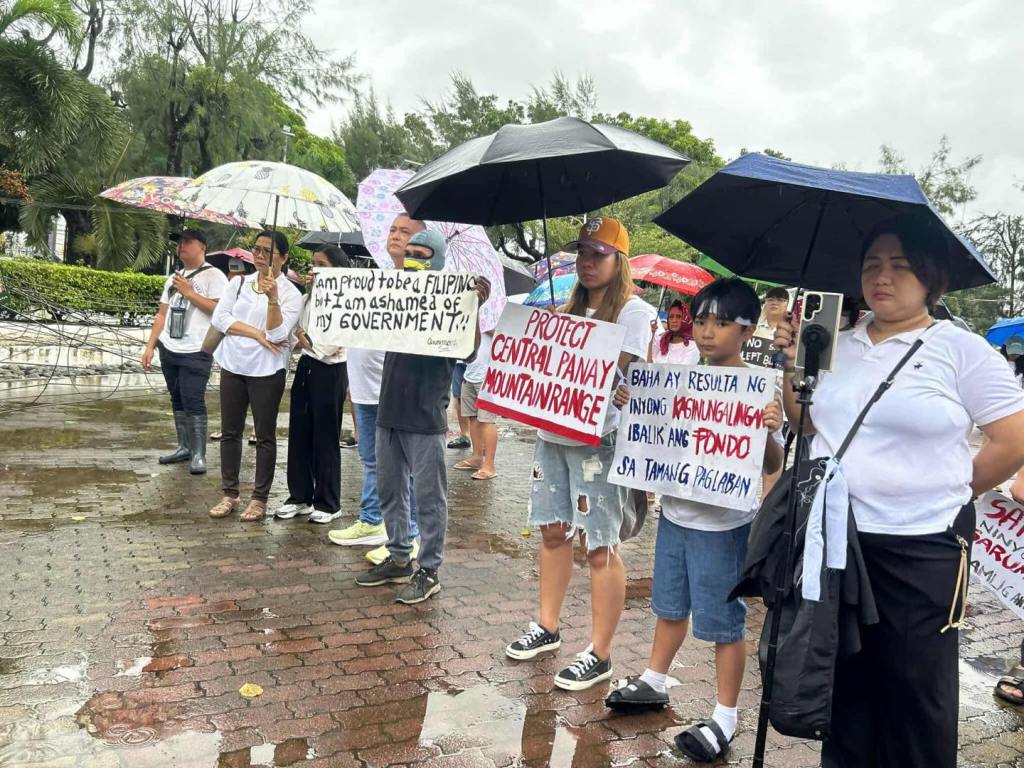
Most importantly, they demand loyalty: not to corporations or contracts—but to land, water, and people. Lotilla, son of Sibalom, then holds the choice: to heed his mother’s cries or remain silent while the machines desecrate the land that raised him.
Now more than ever, when storms threaten to ravage coasts, when the soil trembles with the anger of the mountains, and the climate crisis spares no soul—their calls cannot be ignored.
In the end, Antique waits—wounded but patient. As long as her river still runs and the wind still blows to carry the cries of a mother whose bosom has been bared and battered, and whose fate rests in her son’s hands, her defenders are not silent.
Mariella Villodres is the 51st Editor-in-chief of Pagbutlak. She is currently on her junior year as an applied mathematics major at the Division of Physical Sciences and Mathematics.





 Pagbutlak
Leave a comment