
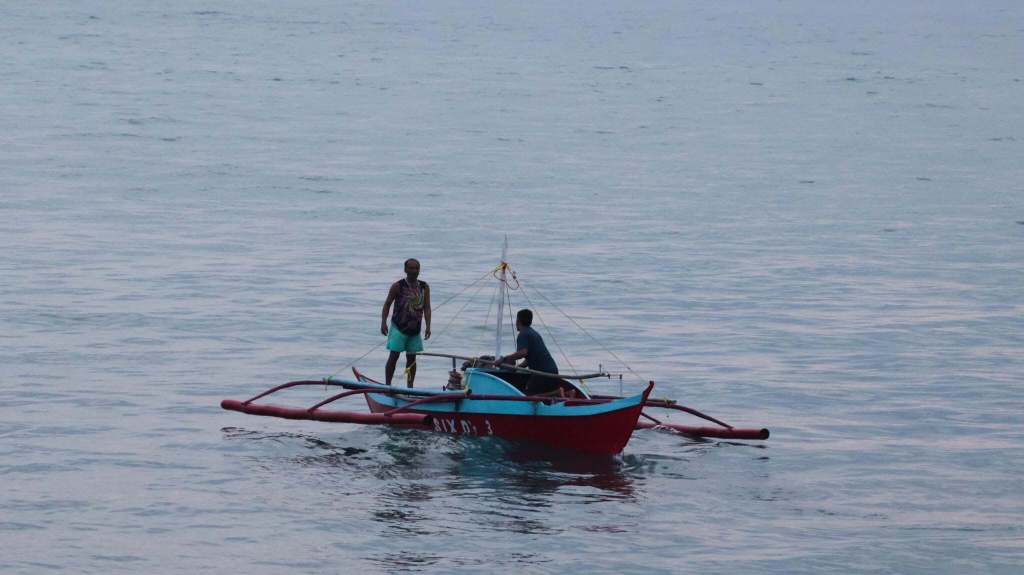
For Miagao fishers, to stop fishing is to stop surviving.
At the seawall in Miagao, students gather almost every afternoon. They sit on the cold concrete, laugh over shared snacks, and take photos of the fiery sunsets that fall into the sea. From this vantage point, the town seems timeless as the waves keep their rhythm, the horizon stretches endlessly, and the sea offers a comforting illusion of permanence.
But behind this picture of calm is a reality that most of us never notice. For fishing families who live along the same coast, the sea is not simply a backdrop for leisure or Instagram posts; it is a daily gamble between sustenance and survival.
Overlapping disasters
The month of October began with the ground shaking across the Visayas. A magnitude 6.9 earthquake struck Cebu, its tremors rippling through nearby provinces including Iloilo. Just over a week later, another quake, this time at magnitude 5.6, rattled the region again.
In Miagao, walls cracked, boats were battered, and homes were left vulnerable. For Analyn, a wife of a local fisher, the fear of losing her house to the wind was as immediate as the worry of how to feed her children the next day. “Budlay gid ya, budlay. Pero amo lang gid na ang buhi. Kinahanglan mag-antos kag mag-ubra maayo,” she said. Life for her family means endurance: her husband risks his life at sea while she sells her husband’s catch under the scorching sun or pouring rain.
Even before the earth moved, the Visayas was still reeling from Typhoon Opong, which had swept through the islands a month earlier and left large swaths of farmland and communities in ruins. For coastal Iloilo, disasters overlap like waves crashing one after another. The typhoons had already flooded villages, storm surges had swallowed shorelines, and erratic weather had made fishing even more uncertain. Climate change has brought stronger winds, unpredictable rains, and longer “lean months” when the catch is too small to sell.
For families whose survival is tied to the sea, these disruptions deepen their poverty. Fishing offers no guarantee; on bad days, nets come up almost empty and there’s little to bring home . “Wala kami kwarta kag pagkaon para sa masunod nga semana,” Analyn admitted, describing how missing even a day at sea can mean no money and no food for the week ahead.
Her neighbor Rosalyn, also a fisher’s wife, echoed the same exhaustion: “Ang iban wala kabalo nga lain gid ang kabuhi namon. Kahibalo ako nga madamo man ang pareho kabuhi sa akon, pero usahay makakita ako sang tawo nga klaro nga wala gid sila ya idea kun ano ang kaangay sini.” (Others don’t know how life for us is different. I know many people with lives like mine, but sometimes I see people who I know have no idea what it’s like.)
‘Danger is part of the job’
On the surface, fishing appears to be routine labor. But the risks it carries are immense, and often invisible. Many small fishers head out alone at night in small wooden boats with no radios, life vests, or tracking devices.
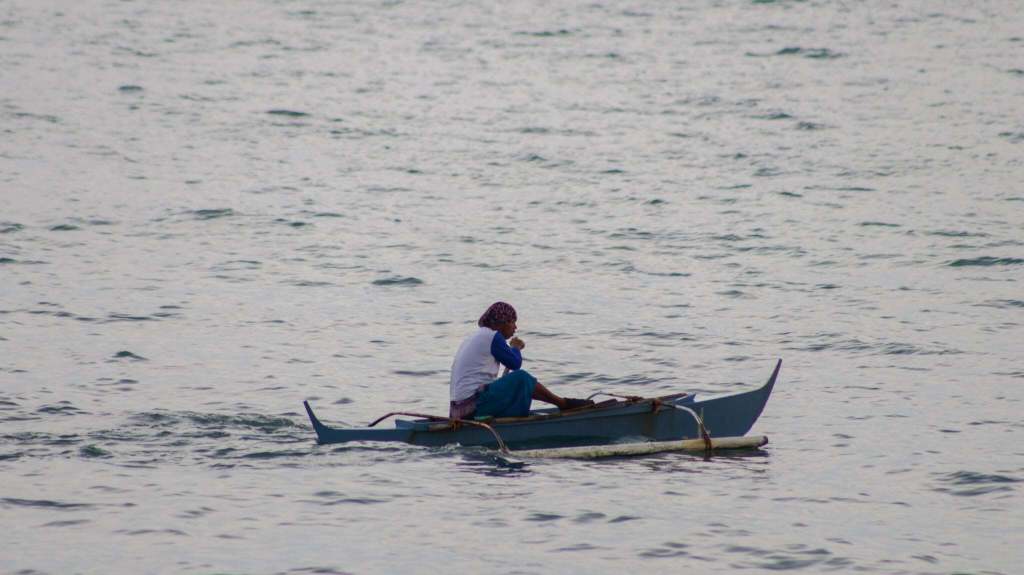
“Mas nami ang akon pangubra nga wala sina kay mas makalihok ako. Kabalo man ko mag langoy,” one fisherman admitted. For him, life vests and radios were not safety tools but obstructions to the only thing he knew best: fishing with his bare hands, honed by decades of practice.
The dangers became undeniable when news broke of a Miagao fisherman who never returned. His boat was later found drifting near Oton and a week later his lifeless body at Iloilo City’s port. For Rosalyn, the death hit too close to home. “Paano lang kun bana ko to?” she asked.
Since then, unease and fear have spread in the community. Some fishers go out less frequently, while others continue because poverty leaves no choice. “Wala man kami choice kay kinahanglan gid namon kwarta,” another fisherman said flatly.
For them, to stop fishing is to stop surviving.
Mental health struggles remain unspoken
In recent years, conversations about mental health have gained traction in urban areas, particularly among students and young professionals. But in fishing villages, the concept is often dismissed. “Subng lang na nag-uso sa generation nga ni ang mental health kag depress-depress,” one fisherman remarked. “Samon nga tion, wala na na samon, normal man lang na.” For them, fear, grief, and exhaustion are part of life—nothing extraordinary, nothing to seek help for.
And yet, even in silence, cracks appear. Wives confess to sleepless nights waiting for their husbands. Families sometimes skip meals until the fisherman returns, uncertain whether he will return at all. In quiet moments, anxiety lingers like an unspoken companion.
The psychological weight of disasters, earthquakes, typhoons, and deaths at sea is real but often hidden beneath a culture of endurance. To speak of fear is to admit weakness, and in communities where survival depends on persistence, silence becomes the default coping mechanism.
Neglect deepens the wound of disaster
Adding to these burdens are structural inequities. Fisherfolk are entitled to fish within the 15-kilometer municipal waters, but the Mercidar Ruling made intrusion by commercial vessels a persistent problem. Small-scale fishers with wooden boats cannot compete with commercial trawlers that sweep through the same waters. It’s an uneven fight—one that leaves small fishers competing not just against the sea, but against a system that seems designed to overlook them.
[RELATED: Fishing for Justice: How deep must we sink?]
Government safety nets, too, are paper-thin. “Wala pa kami may gina-report, amo nga wala pa sila nagabulig,” Rosalyn said, explaining that unless they formally seek help, assistance rarely arrives. For many, aid feels conditional, distant, or simply out of reach.
Beyond the sunsets
For students, residents, and visitors, Miagao’s seawall will remain a place of gathering, laughter, and quiet sunsets, but behind every picturesque horizon is a family measuring the waves not by beauty but by danger. Every crack in a wall, every broken boat, every sleepless night is a reminder that while we enjoy the view, others live with its costs.
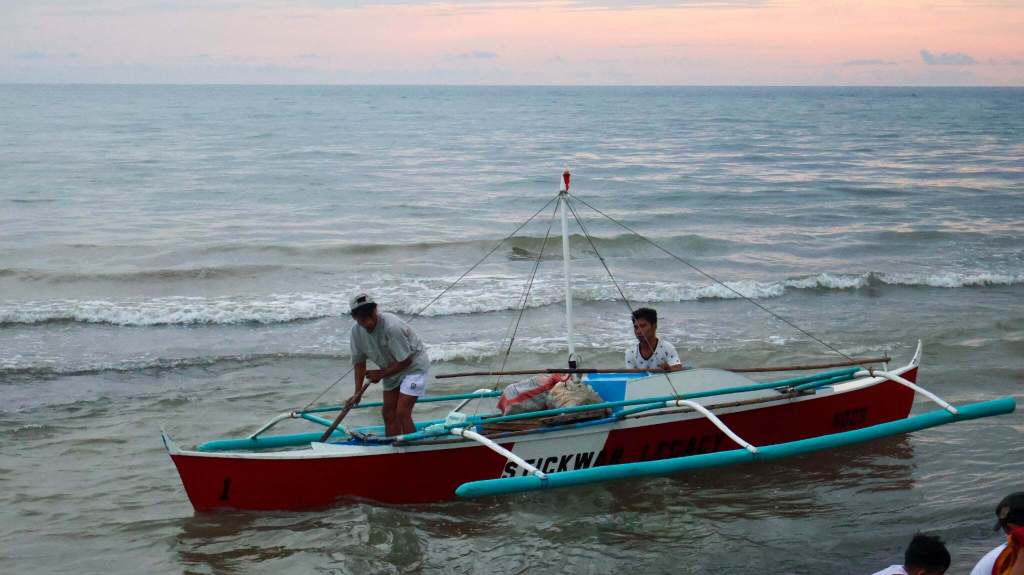
The fishermen’s wives put it best. “Budlay, pero amo lang gid na ang buhi,” said Analyn. Life, for them, is hard work with no guarantees.
By tomorrow at dawn, husbands and other fisher’s boats will head out again, families will wait again, and life in Miagao’s fishing villages will continue. In the end, the sea continues to feed and threaten, to comfort and to devastate the marginalized. For the rest of us, the least we can do is to see beyond the sunsets and recognize the labor, the fear, and the resilience of the people whose lives are tied to the tides.
Grace Abigail Chua is a third-year Communications and Media Studies student at the University of the Philippines Visayas. She writes to give voice to local communities and untold struggles, driven by transparency, change, and making a difference in her own small way.


 Pagbutlak
Leave a comment