
Pagbutlak/Phil Liam Nono/File Photo
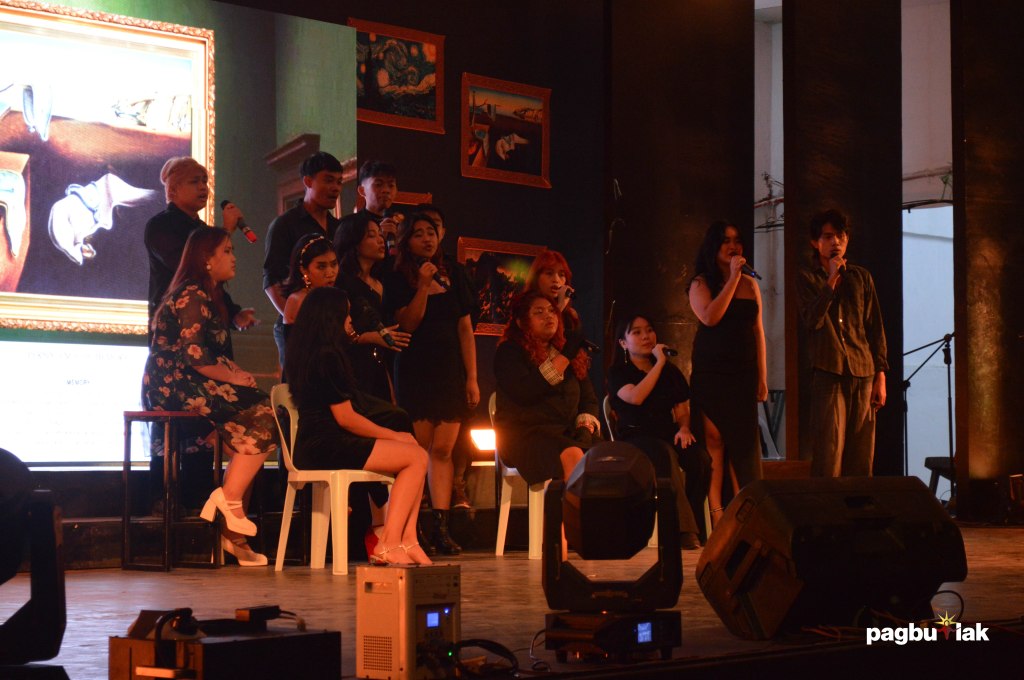
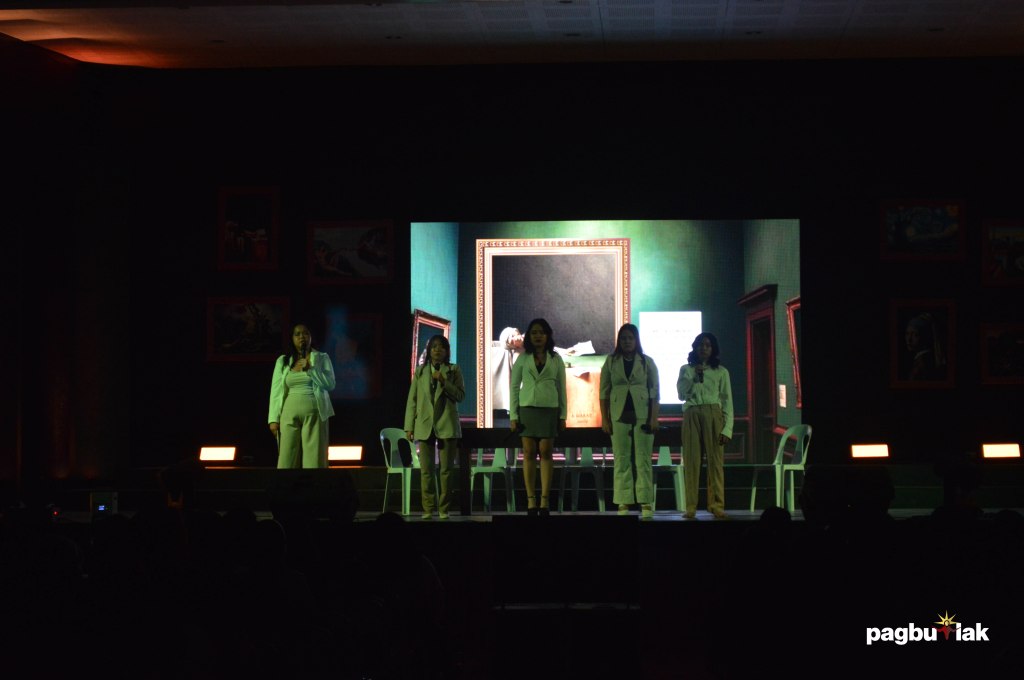
A bright light spills across the stage, and singers stand in hush and shadow, poised to weave melodies of subtle defiance. Obra Maestra: Echoes of the Canvas is more than a mere spectacle, but an uproar for justice and freedom brought to life with breathtaking grace. Now set on stage, it becomes an invitation to feel, to remember, and perhaps most powerfully—to awaken.
Staged by The UPV Choristers, the concert is an ambitious fusion of choral music, live projection, visual art, and theatrical storytelling. But it never feels like a gimmick. Each element—every harmony, every frame of light, every painted image—moves in synchrony. And beneath it all runs a quiet pulse. One of memory, resistance, and awakening.
Pagbutlak/Phil Liam Nono/File Photo
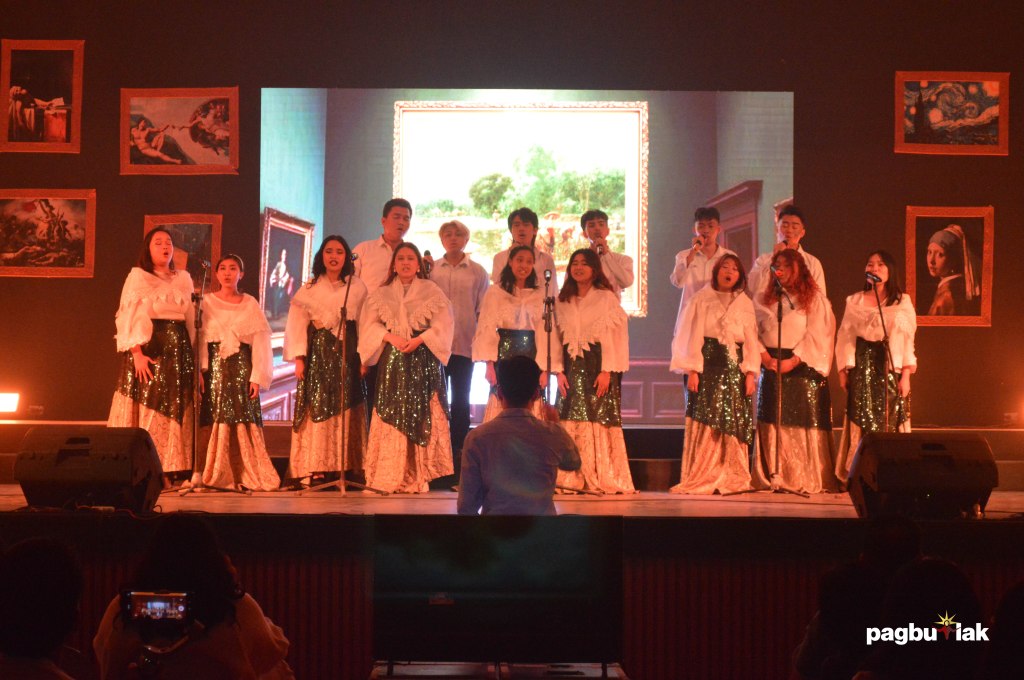
As the curtain rises, the performers’ costumes stand out against the dark backdrop. The screen illuminates not just the beautiful precipice but also the crowd’s minds to see each song as a story in itself. Each song is a dedicated look back to paint a story, quite literally, as artworks from different historical periods are projected alongside familiar contemporary songs. Each performance becomes more than just music; it is a conversation with history.
The show follows the timeline of art history, tracing centuries of creativity, reminding us that what once was will live again, here on this stage, within the span of three hours. More than singers, they become vessels of movement and meaning, shaping the stage into a space wholly their own.
Pagbutlak/Phil Liam Nono/File Photo
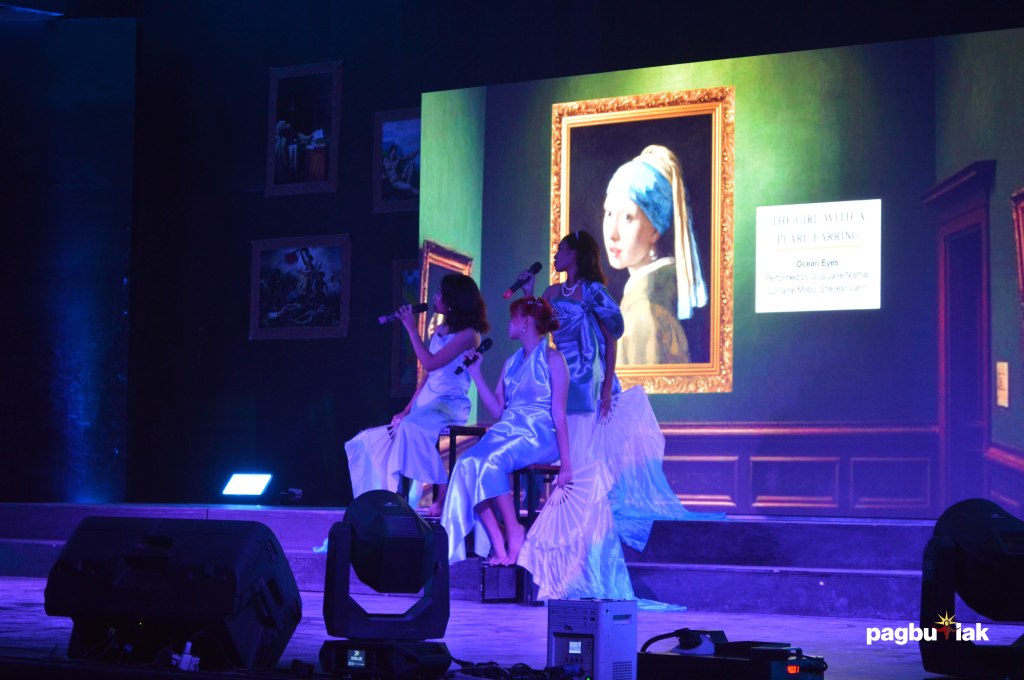
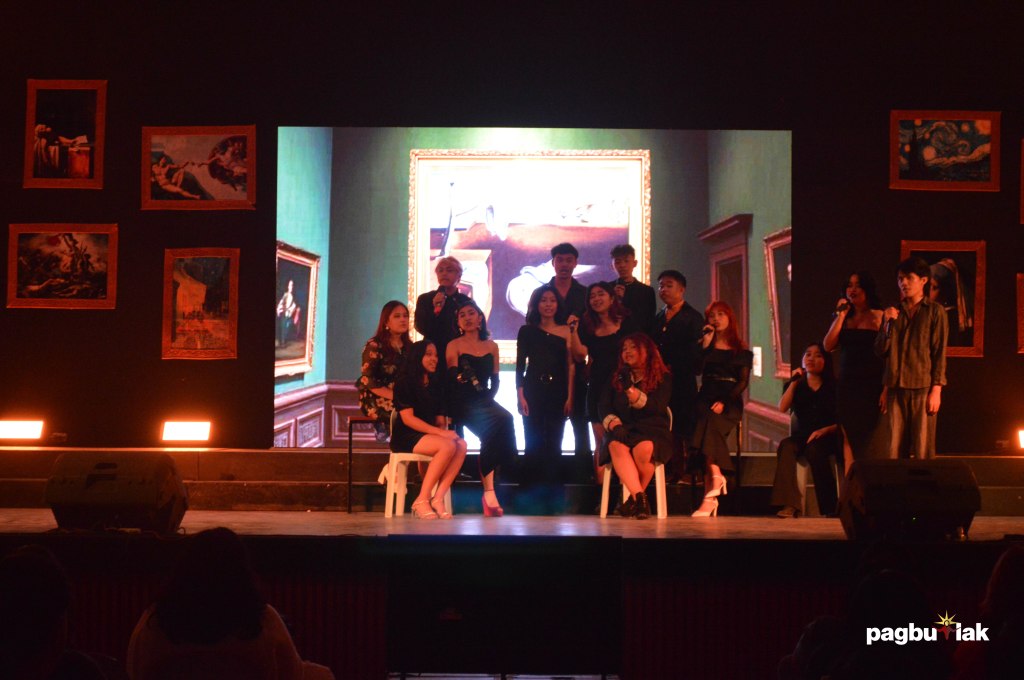
It opens with the first few beautiful harmonies of Celine Dion’s Ave Maria, angelic and solemn, grounding the crowd in reverence. The momentum follows with Pentatonix’s Hallelujah, this time sung by men reaching both the deep and the high ends of the notes on the music score. The insurrection then becomes evident with Ariana Grande’s God is a Woman, as this sings of the woman not as a muse, but as a maker, finding that God is not just above but also within her body and soul.
The stage remains illuminated by performances that explore recurring themes, gently unveiling human experiences through song and movement. As one narrator puts it, “a sudden light casts through the mundane… a moment of awakening when choice and faith collide in a single breath.” Likewise, Obra Maestra breathes life into that moment, where poetry, painting, music, and theatre dance together in a single breath of art.
Pagbutlak/Phil Liam Nono/File Photo
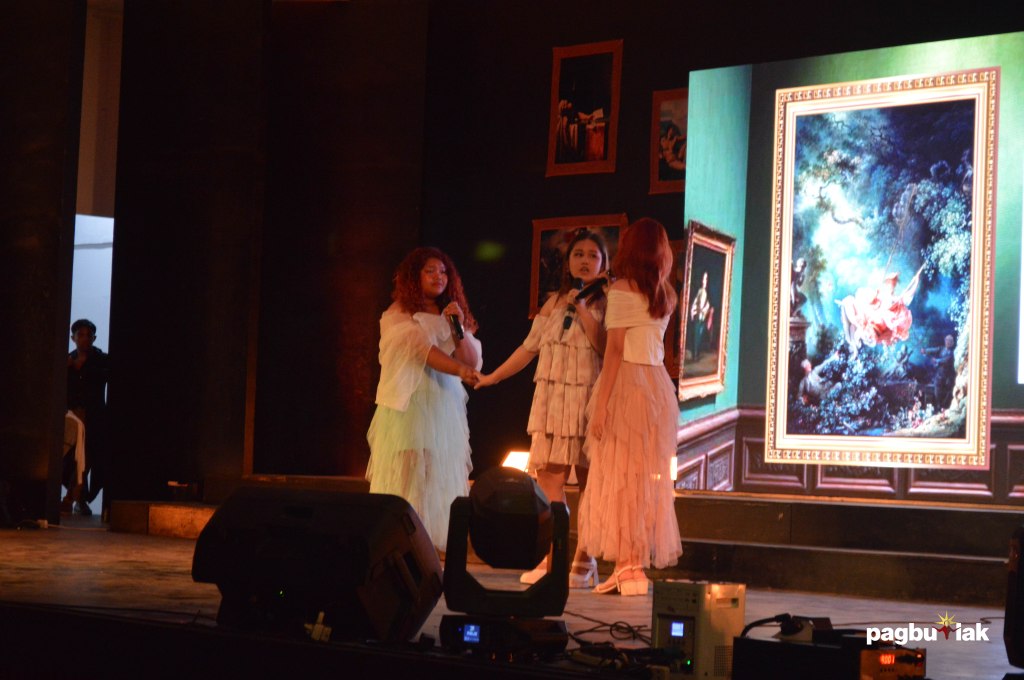
A standout moment arrives with their rendition of Clairo’s Sofia, perhaps one of the evening’s most vulnerable performances. Accompanied by sparse instrumentation amplifying the story of queer yearning with two women waging war for the love of one beloved soul. This performance reveals a symphony of longing and tender vulnerability, warming the hearts of an audience equally longing for a love shaped by the same deep ache.
Pagbutlak/Phil Liam Nono/File Photo
Then, in front of Jacques-Louis David’s masterpiece, The Death of Marat, a painting depicting the death of a revolutionary leader, the performance sharpens, and a voice breaks the musical flow. “I fulfilled my duty as a journalist… keep telling our stories, until Palestine is free.” It is a reminder that storytelling, like song, is an act of resistance. That journalism, too, is a canvas.
As songs end and chapters close in each song, the clamor for change and equality echoes beyond the stage, pulsing through every breath and quiet moment that remains. Through it all, Obra Maestra is relentless in its call. The hunger for justice coils deep within while gathering passion and fire, until it erupts in a radiant flare that sets hearts ablaze, hope alive, and voices free as The UPV Choristers sing the final songs Barbra Streisand’s Memory and Wicked’s For Good.
Pagbutlak/Phil Liam Nono/File Photo
Kore’s Obra Maestra reminds us that history’s canvas is never truly still. Each brushstroke, each melody, each tale continues to unfold in the present, inviting us to witness, to question, and to carry forward the stories waiting to be told.
Because the show does not end when the lights dim or the curtain falls. It lives on in the hearts of the crowd and the performers, igniting a fire for the truths it dares to uncover. If anything, that’s when the real performance begins—outside and among us.
Ivan Entrampas is a second-year Statistics students under the Division of Physical Sciences and Mathematics. She became a member of Pagbutlak in 2023 and currently serves as one of its resident culture writers. Her work often explores the intersections of film, music, and visual art with broader social currents.


 Pagbutlak
Leave a comment