
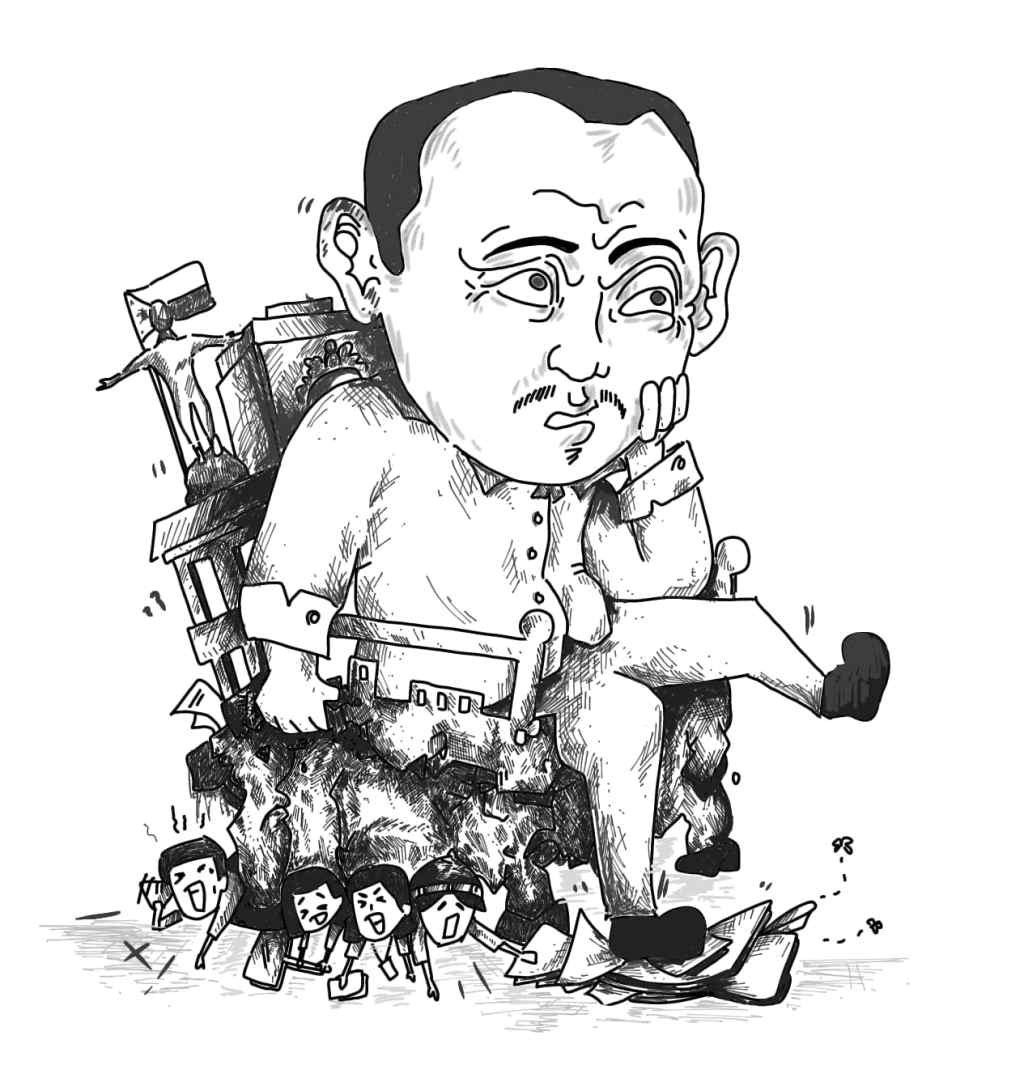
Chancellor Camposano’s 5-point agenda is nothing short of distant aspiration unless he takes decisive action to address the specific and general demands of the students.
For years, the UP Visayas have been yearning for a leader who understands their concerns. Now, disillusionment prevails as faith wanes in the efficacy of a self-proclaimed pro-people and pro-student chancellor.
In October last year, Chancellor Clement Camposano was selected anew to lead the University. His reappointment was met with mixed response from the UP Visayas community, with some— mostly his colleagues— praising and congratulating him, while others ragged and scoffed at his reappointment.
In his first bid for the chancellorship, Camposano promised in his six-paged 5-point agenda to build on strength in teaching, research, and public service, deepen engagement with the communities, lead meaningful change in education, defend and promote diversity and inclusion in the campuses, and reinvigorate democratic governance in the university. However, his leadership, at times, left a bitter taste in the mouth to some— especially the students he was expected to serve first.
We cannot forget: in October 2021, just one year after his successful bid for the chancellorship, Camposano received and hosted the National Task Force to End Local Communist Armed Conflict (NTF-ELCAC)–the same agency that red-tagged progressive student leaders and groups–inside the University in a dialogue. This move by the Chancellor was heavily criticized by students and unions, as they saw it as a threat to the security and academic freedom of the University community.
Furthermore, Camposano refused to sign a statement drafted by the UP Visayas University Student Council and the All UP Academic Employees Union-Iloilo, which condemned the NTF-ELCAC, called for an end to future engagements with the agency, and demanded the repeal of the Anti-Terrorism Law, because, to him, it is “not the call of the university.”
As a further point, while Camposano is quick to post seemingly progressive statements on social media, the UPV Committee on the Protection of Academic Freedom and Human Rights has yet to be institutionalized. Additionally, no official statement has been issued denouncing the UP-AFP Declaration of Cooperation, despite the fact that UP Diliman’s University Council has already taken a stand on the matter.
By welcoming these agencies known for their contentious tactics and suppression of dissent, Camposano not only compromised the safety and academic freedom of students and faculty but also tacitly endorsed a narrative that threatened the essence of democratic discourse within the University.
Another contentious issue during his first term was the disqualification of the Latin honor graduating students who attained 4.0 or 5.0 grades in P.E and NSTP subjects, both non-GWA courses. This issue trended on social media, which led to the #NoStudentLeftBehind trend on the X (formerly Twitter) in June last year. This policy goes against the principles of inclusivity and academic excellence, undermining the University’s mission to support and celebrate its brightest minds. Not to mention, the poor communication of the policy to students shows that his vision does not align with the students’ interests.
On his second bid, Camposano stood firm in his belief that the vision he articulated at the beginning of his tenure remains as relevant today as it was then. Thus, he submitted his original Vision Paper, albeit with a few “strategic” adjustments.
One year after his reappointment, the Chancellor has taken steps to realize his vision for the University. However, despite the Chancellor’s active presence on Facebook, his efforts seem to fall short of genuine grassroots engagement.
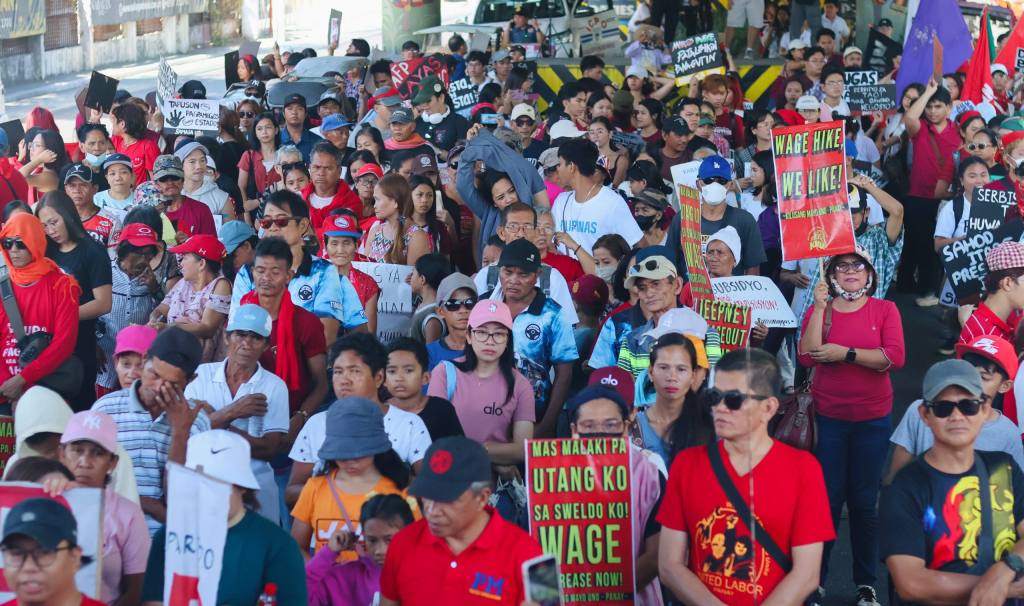
In the face of pressing social and political issues, such as the looming threat of Charter Change and the PUV Modernization Program under the Marcos Administration, Camposano’s silence is deafening. While students and other members of the UPV community take to the streets to voice their dissent and stand in solidarity with the marginalized, the Chancellor remains conspicuously absent. It highlights a troubling trend of detachment from the lived realities of those he purports to serve and raises questions about his willingness to confront power. Whether the Chancellor supports the Charter Change and the PUV Modernization Program or not, we don’t know.
The redesign of academic programs must also be guided by a commitment to equity, diversity, and inclusion. It is not enough to simply update the curriculum or incorporate new technologies; we must also interrogate and challenge the structures of power and privilege that perpetuate inequality within and outside the university gates.
On top of this, Camposano’s 5-point agenda is nothing short of distant aspiration unless he takes decisive action to address the specific and general demands of the students because if he is reluctant to engage with the students and heed their calls, his efforts to make UPV a world-class institution of higher learning is far out of reach.
Since students are the lifeblood of any university, effective leadership within should be defined by a readiness to pay attention to and adjust to their demands, particularly during times of crisis and when students’ safety and well-being are at stake. The Chancellor’s obstinate refusal to acknowledge and respond to the legitimate concerns of the student body may mean a troubling lack of responsiveness and empathy on his part.
For instance, the UP Visayas University Student Council has consistently lobbied for students’ requests for academic ease and leniency in response to various challenges, such as the region-wide blackouts in Panay coupled with successive power interruptions in Miagao last February and March, extreme heat conditions during the months of April and May, and the weather disturbances that brought heavy rains just this September, to name a few.
In response, progressive groups and organizations such as SAMASA-UPV issued an appeal urging a transition to blended or online learning, citing the severe threats it poses to the well-being of students and faculty members. However, the Chancellor’s response remained disappointingly unchanged: deferring the decision to the discretion of faculty members.
The Chancellor’s view of academic freedom is debatable on this matter. While academic freedom does encompass the autonomy of faculty members in their teaching and research endeavors, it is not an absolute license to disregard students’ welfare. Academic freedom should be exercised responsibly with due consideration for the welfare of the broader community inside the university. While it is true that faculty members may have the autonomy to make decisions about academic matters within their classrooms, the overarching responsibility of the university administration, headed by the Chancellor, is to ensure a safe and conducive learning environment for all students and faculty. Championing pro-student policies is not just a matter of administrative convenience but a moral imperative.
By now, Camposano must already realize that the student body and the sector’s decision to abstain from openly endorsing a nominee for the position of UP Visayas chancellor is a reflection of the disillusionment and discontent in his leadership from those very students and sectors who once fervently supported his bid for the position back in 2020.
Likewise, there is no better lesson in the value of neutrality and complacency than being confronted with the consequences of inaction. Camposano’s neutrality and silence in the face where injustice, oppression, and societal problems plague the very community he is expected to serve, he inadvertently contributes to the perpetuation of these problems.
As its crisis of credibility deepens, it is imperative — for the University, for higher education, and for the nation itself — that the University, through Camposano’s leadership, do what it can to rescue the very foundation upon which the institution stands.
Lastly, while his 5-point agenda may have laid a promising roadmap for the University’s future, it is evident that the students’ and sectors’ current needs and demands cannot be overlooked. He must now recognize the urgency of these demands–the first step is to sit with the students and sectors to revisit these demands.
The Pagbutlak Editorial Board
The Pagbutlak editors represents the collective voice of the publication, offering informed perspectives on pressing issues and advocating for the interests of the community it serves.



 Pagbutlak
Leave a comment