
by Kristina Mutia | graphics by Klyde Factes
TRIGGER WARNING: Mentions of sexual violence, rape, harassment, and victim-blaming. Reader discretion is advised.
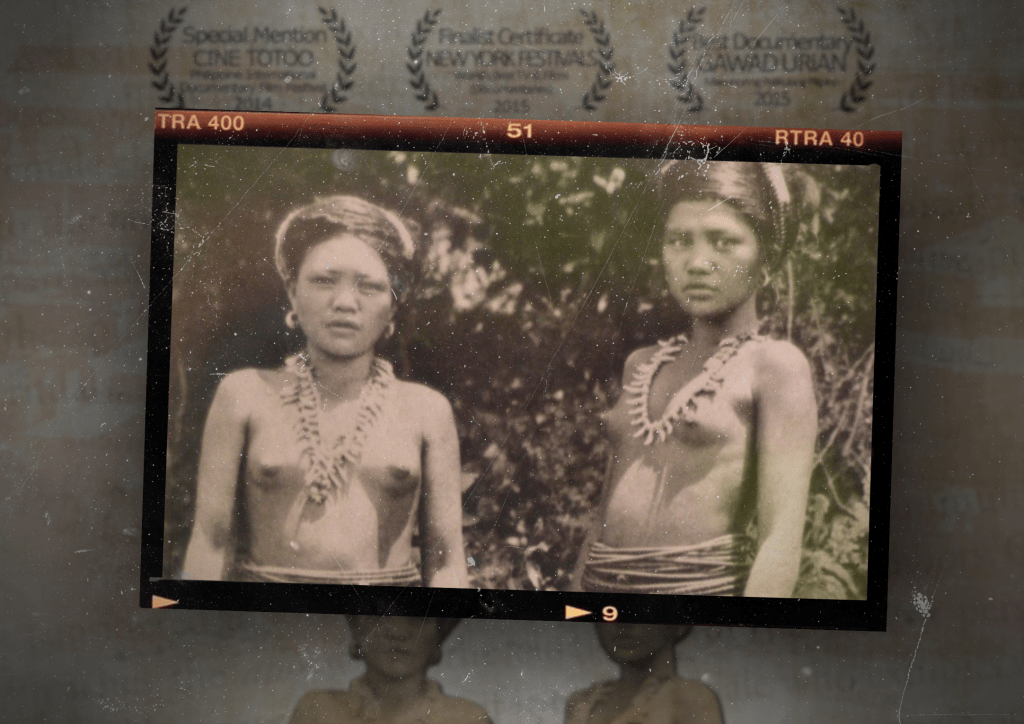
In a town in the northern Cordilleras, often just passed by tourists heading to Baguio—there are stories that rarely reach the news. In Bontoc, elders speak of women who, when men threatened their land, would raise their skirts and flash their genitalia in defiance. It wasn’t seduction nor shame. It was a declaration: this body is life-giving, this body is ancestral, this body is not yours to conquer. The men, as said, would step back, not out of fear or scandal, but because of a deep respect for what came before them.
This unsettles modern assumptions. Today, a woman’s body is often seen as a liability, something to cover, guard, and protect—treated like a weakness, a burden. In this mountain town, the body could serve as a boundary. Respect did not depend on fabric but on belief.
The GMA Public Affairs documentary “Walang Rape sa Bontok” tells a story that almost feels impossible: a time when Bontoc reportedly had no recorded concept of rape as defined in lowland Philippine law. Bontok was a “rape-less society.”
Young men and women grew up together in the ato, the communal house. They learned customs, spoke openly, courted, and formed relationships under the watchful eyes of elders. Families knew one another, and everyone’s behavior was visible. Love did not grow in secret; it grew in the rhythm of daily life.
As the documentary shows, young men did not even know how to kiss. Love was shown through actions: tending the rice fields, helping care for children, and keeping the house in order. Courting was slow and open, guided by respect. Love remained simple, honest, and real.
To the Bontoks, care and respect were part of daily life. Men were taught to treat women properly. Boundaries were not only recognized, they were sacred. Accountability was shared. Safety was never just one person’s responsibility; it belonged to the entire community.
Yet outside the mountains, the language of respect often sounds very different. Recently, Quezon City Representative Bong Suntay drew public criticism after recalling that when he once saw actress Anne Curtis, he felt “init” and imagined things about her. The remark sparked outrage from women’s groups and many Filipinos who saw it as a form of sexual objectification; especially troubling because it was spoken by a public official during a formal hearing. Moments like this reveal how easily a woman’s body can still become the subject of casual commentary, even in spaces meant for law and governance.
Today, the response often follows the same script. When a woman experiences assault, the questions focus on her: what was she wearing, why was she outside, why was she alone? Rarely do we ask about the abuser.
Bontoc was not perfect, and no society is. Yet it shows something many modern communities have forgotten: safety was never meant to be carried by women alone. When only women are expected to protect themselves—through the way they dress, the places they avoid, or the hours they keep, the system has already failed.
The problem is not the dress. The problem is not the time on the clock. The problem is the system—the messages culture and media send to men, the patterns society silently allows, the behaviors we continue to silently tolerate.
In a quiet town on the way to Baguio, there is a memory of a time when respect was not optional, and accountability was shared. A time when women’s freedom did not mean carrying all the risk.
Walang rape sa Bontok kasi.
Kristina Mutia is a freshman Political Science student at the University of the Philippines Visayas, under the Division of Social Sciences. She currently serves as a columnist for Pagbutlak.




 Pagbutlak
Leave a comment