

When the flood control fiasco unfurled, we flooded our own social media timelines with outrage and humor. Trends and online gags became our outlets; our little pockets of solidarity. It’s a classic coping mechanism perfected only by a country so chronically online—and so chronically failed by its system—as ours.
Bisaya and Tagalog keyboard warriors assembled online like an Avengers montage—complete with Gloc-9’s “Upuan” or ABBA’s “The Winner Takes it All” as background music. Everyone united in roasting nepo babies and their beltline fashion as we waded through high-waist waters.
Memes revolved around flood control projects that turned Philippines into Venice, except without the romance or gandolas—just rancid water and rats (with no distinction made between the ones in the gutter and the ones in government).
These are what filled my social media feeds in the past few weeks. I figured then, that at least now, my doomscrollings are cushioned by the laughter. For we Filipinos simply did what we do best in times of crises. When the flood control fiasco unfurled, we flooded our own social media timelines feeds with outrage and humor. Trends and online gags became our outlets; our little pockets of solidarity. It’s a classic coping mechanism perfected only by a country so chronically online—and so chronically failed by its system—as ours.
GHOSTS IN FLOODWATERS
This fiasco rose from the tragic waters of last July’s back-to-back storms that left 8 million of our fellow Filipinos affected. With at least 26 dead, 300,000 displaced, and livelihoods flushed away, what remained was the familiar ache of loss. It lingered long after the floodwaters receded—just as it vividly lingered in me, in memory, the clip of a couple clinging so helplessly to the lifeless corpses of their carabaos. I may have since lost the link to the video in the endless churning of our algorithms, but the guttural cries of that couple still haunts me.
And along that collective haunting grief, came the fury. It came through the reminder that a P545-billion budget has been allotted for flood control projects just at the start of Marcos’ office. It made us question in anger: if so much money has been pooled into all these, why were lives and livelihoods still washed away? Where art thou flood control funds?
And the answer surfaced soon enough—ghost projects, padded contracts, and the obscene opulence of officials whose salaries could not explain their wealth.
THE MATHS OF PLUNDER
As a Math major, I don’t fear numbers, but the following made me sick: a whopping P100 billion of the flood control budget was revealed to have been divided among just 15 contracting firms nationwide. And among the biggest beneficiaries? The so-called “flood control royalty”, the Discayas—owners of nine different companies and holders of 421 projects that totalled P31 billion. And now that they’ve been caught, they decided to drag the others down with them. They presented their list of “top snatchers” in government which included actor-turned-politician Arjo Atayde and Elizaldy Co of the Ako Bicol Party-list—uncle of the luxury lifestyle influencer Claudine Co.
What unfurled then was a game of naming names and pointing fingers.
Elsewhere, a rat race ensued in Bulacan—the most notorious in flood project anomalies—where former DPWH district engineer Brice Hernandez blew the whistle on a system that seems to reward sheer audacity over competence. On paper, he earns a modest P70,000 monthly salary but in his garage: a P30-million-worth Lamborghini Urus.
Similar to the Discayas, he ratted out his accomplice Henry Alcantara, and pointed his finger even higher—towards Senator Jinggoy Estrada. His evidence? Photographs of P1,000 bills stacked on tables to be distributed among plunderers who view infrastructure projects as business ventures.
TREND AS OLD AS TIME
However these trending flood control and corruption issues are nothing new. I think we shouldn’t forget that like most trends, issues on crises are simply recurring, rebranded, and very much, remnants of a haunting past.
With September 21 fast approaching, we shouldn’t forget who the “OG trendsetters” were: the Marcoses—our nation’s original architects of extreme excess.
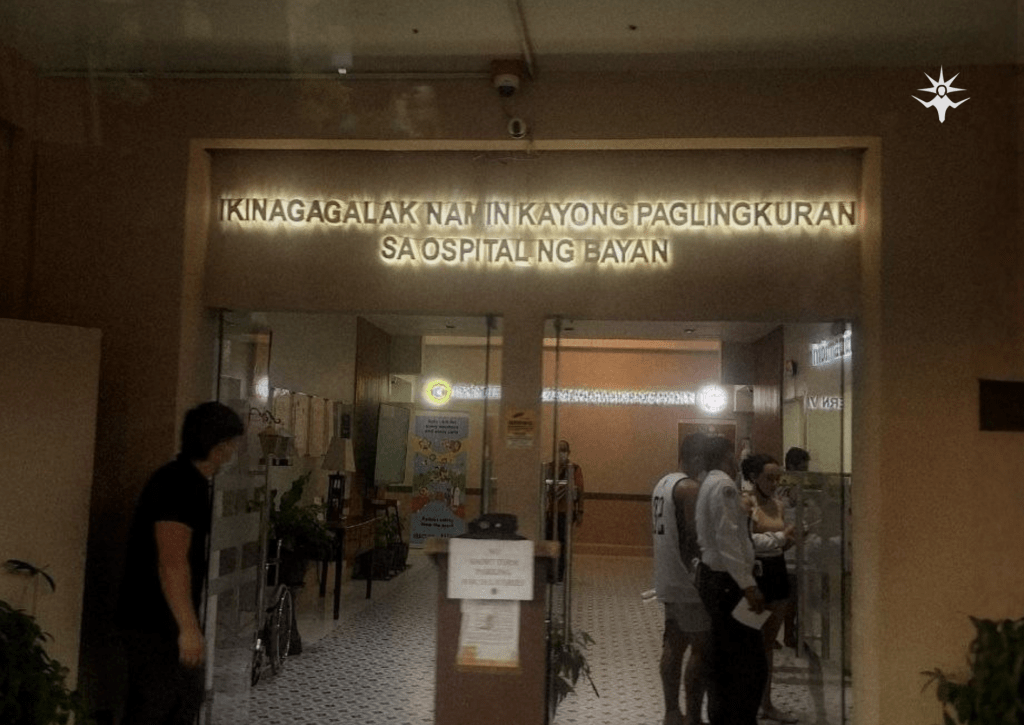
Today’s useless flood control projects and failed infrastructures echo the edifice complex of Marcos Sr.’ regime. From the Manila Film Center built in a rush, killing hundreds of workers, to designer hospitals that served only the rich—Marcos’ regime was all about spectacle in the guise of progress. He erected infrastructures for vanity and the display of power but never in service to the people.
Meanwhile, the material extravagance of our modern-day “nepo babies” and children of contractors recall Imelda’s infamous shoe collections. From diamond tiaras to palace-like mansions and impromptu international flights, Imelda was the prototype for today’s modern line of flood control disney princesses.
And while social media saw shortlists of Philippines’ top nepo babies, we have forgotten to include the biggest nepo baby of them all: Ferdinand “Bongbong” Marcos Jr.
With the same plunder and shamelessness that runs in his blood, recall him racking up 20 foreign trips in less than two years—including where he jetted off to Singapore for a conference, only to stay just to watch racing cars in the expensive F1 Grand Prix with his entire family. All that while our jeepney drivers’ calloused hands raised placards under the noontime sun to protest against the PUVMP, asserting their right to work and live. Recall also how he’s so proud of his P20/kilo rice program. All while local farmers remain landless, unsupported, among the poorest, and will be earning close to nothing with such a program.
But most importantly, recall that in just under 20 minutes, while the nation was distracted by the flood control issues, his office’s budget of P27.3 Billion (a whopping 72% increase from last year) was swiftly approved with no issues. It’s an amount that could have easily gone to basic social services or at the very least towards reparations for the communities drowned not just by the recent floods but by his family’s legacy of corruption.
HAUNTINGS OF OUR PHANTOM PAST
This is more than just historical coincidences or just “history repeating itself”. Because history does not repeat itself simply because it was “fated to”—it haunts. It haunts us because its unfinished businesses were never confronted.
These modern-day displays of corruption and the return of a plundering son all stemmed from a long legacy crafted by the Marcoses. It’s a legacy that was failed to be uprooted—even by the EDSA People Power revolution.
Because here’s the uncomfortable truth: what brought the fall of the Marcoses was not a revolution. It was a mass uprising, yes—truly noble and utterly necessary. But it was not a revolution. It did not dismantle the very systems that birthed Marcos in power. Landlords remained landlords. Dynasties entrenched. The military remained untouched. The Marcoses came back. And the people remain oppressed.
EDSA REVOLUTION’S UNFINISHED BUSINESSES
What were these unfinished businesses exactly?
One, it overthrew a dictator—not a dictatorship. When Marcos Sr. was ousted, the elites simply returned unscathed, scrambling over the spoils. They reshuffled among themselves to remain in power and guard their wealth.
The Cojuangcos and Aquinos. The Enriles. The Romualdezes. The Marcoses.
The same landlord clans, family businesses, and political dynasties that thrived under martial law carried on. In the Philippines, dictatorship has never been about the concentration of power in one man, but in an entire elite class committed to plundering even without Marcos Sr. at its helm.
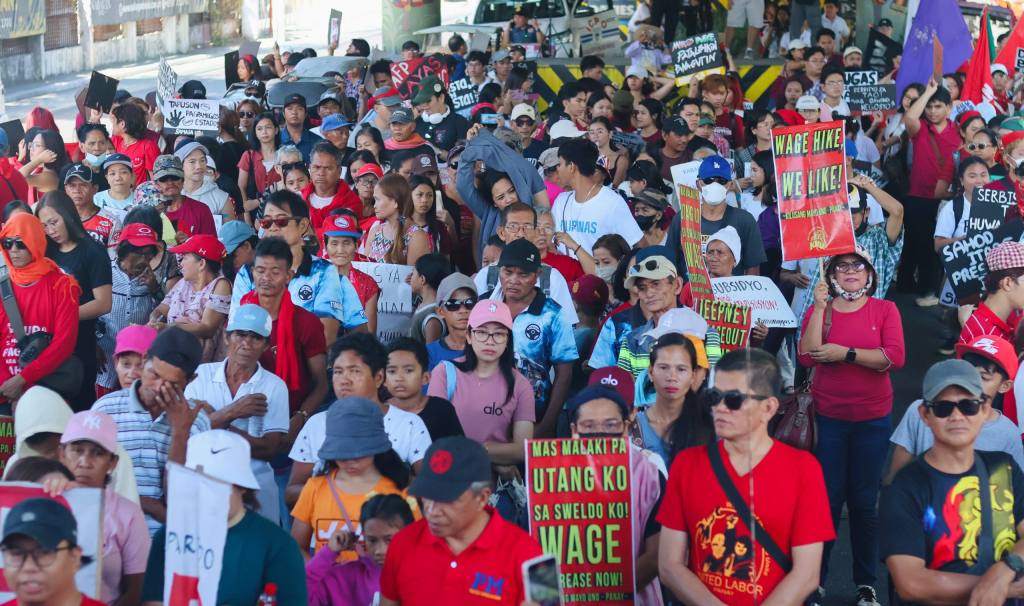
Two, students and workers stood shoulder to shoulder in the fight for freedom—but their children still inherited their struggles. Unemployment is at a three-year high while the Senate junked the P200-wage hike as prices of commodities soar. Our education system is in crisis while classrooms crumble as the budget for education is slashed—all while billions are poured into the pockets of the powerful.
Three, the Edifice Complex lives on through build-loan-builds over nationbuilding. The Philippines has a debt of P15.3 billion from constant loaning from the World Bank and foreign investors. And where do they go? To mostly infrastructure-buildings (that are now widely known as viral sites for corruption). But worse, these loans come with international strings attached—all in the form of “recommended” policies that serve not the people’s interests.
Case in points: (1) Aquino’s K-12 Policy under World Bank’s recommendations which produced “job-ready” workers for export rather than strengthening local employment. (2) Ramos’ IPP contracts backed by the World Bank led to the privatization of energy—the origin of our sky-high electricity bills. (3) Duterte’s Rice Terrification Bill and “Build Build Build” saw agricultural dependence on foreign imports and loans from China. (4) Marcos Jr.’s “Build Better More” infrastructures like the notable Kaliwa Dam are just continuations of Duterte’s legacy of loaning from China. (5) All these while the farmers, the workers, and the fisherfolks—the sectors that are the very backbone of this nation—remain neglected.
The EDSA People Power revolution was unfinished business because the uprising stopped short of systemic change, because the enemy was treated as one surname, not the system that keeps producing people like them.
MORE THAN JUST A TREND
Let the memes be more than momentary punchlines. Let outrage outlast algorithms. Let fleeting anger turn to sustained collective insistence of our rights.
For if September 21 taught us anything: the struggle against tyranny shouldn’t be this one-time thing. The resistance shouldn’t end at certain surnames. The constant pulse of a people who will not be oppressed again should never die.
Now more than ever, with the Marcoses back in power and September 21st drawing nearer, the present bears a haunting resemblance to the horrors of Martial Law’s past. So if there is a trend worth reviving, let it not be the tyrannies of the Marcoses nor the cycles of corruption that continue to drown us. Let it be the unfinished business of People Power—this time carried through to its end.
Ella Villodres is a junior of BS in Applied Mathematics at the Division of Physical Science and Mathematics. She writes features for Pagbutlak since 2023, and currently serves as its 50th Associate Editor.



 Pagbutlak
Leave a comment