
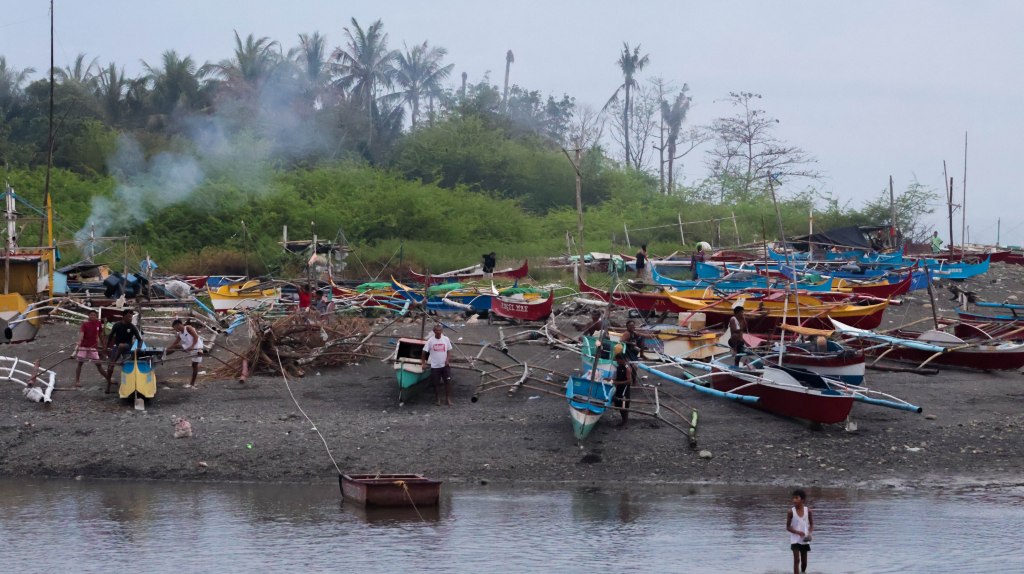
Over the years, we have witnessed another troubling change: the sea is no longer as generous as it used to be. Fisherfolk who once came home with buckets full of fish now return with barely enough to feed their families.
I was born and raised in Barangay Cabasi, a small coastal barrio in the town of Guimbal, Iloilo. My family, like many others in our community, has always depended on our seas. Some of my earliest memories are of the scent of saltwater in the air, the rhythmic creaking of wooden boats, and the laughter of children playing by the shore as their fathers and uncles prepared for another night at sea.
My father, like his father before him, was a fisherman. I grew up hearing stories of how he had to stop going to school from time to time to help my grandfather, Tatay Keke, fish. They would sometimes sail as far as the seas of Palawan, where the waters were richer and the haul was decent, just to bring home enough to sell at the market, preparing as meals for a family of eleven what was left of their catch. I also remember the story of my Uncle Randy, Tatay’s younger brother, who once braved the wrath of Typhoon Frank. When the storm’s powerful currents threatened to capsize his boat, he had no choice but to leap out of his boat and into the sea to swim for his life, only to be reunited with it when the strong tides carried them both safely to the shores of Guimaras.
Even the very identity of our barangay is tied to the ocean. As a child, I often wondered about the fish depicted on our barangay seal. It was called Cabasi, and it had once thrived in our waters, abundant enough to give our community its name. But as I grew older, I learned the painful truth: that species no longer exists in our waters. It is a reminder of what was once plentiful, now lost to time and overfishing.
Over the years, we have witnessed another troubling change: the sea is no longer as generous as it used to be. Fisherfolk who once came home with buckets full of fish now return with barely enough to feed their families. In a practice called panugbong, residents from the neighboring towns of Igbaras, Tubungan, and Tigbauan would also come to the coastal lines of Cabasi to purchase the abundant fish harvest. Now, that practice has nearly disappeared. The once-bustling shorelines, where buyers from nearby communities eagerly awaited the arrival of fishing boats, are now quiet. The lively exchanges, the weighing of fresh catch under the dim glow of fluorescent lights, and the hurried bartering that once filled our coastal evenings have faded into memory. Instead, what we see now are disappointed faces—both of fisherfolk who barely have enough to bring home, and of buyers who return empty-handed. The sea, which once sustained not just our own community but also those from the inland towns, now struggles to provide even for those who have depended on it for generations.
And with the Supreme Court’s ruling in the BFAR v. Mercidar Fishing Corporation case, we fear that the little we have left will soon be taken from us as well.
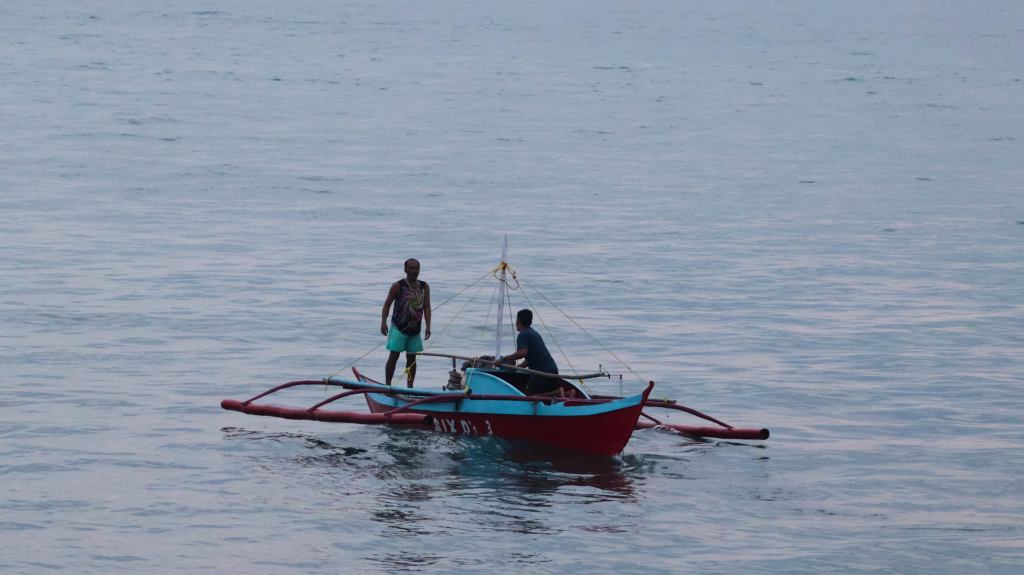
BARELY AFLOAT. Miagao fishers trying to make ends meet amid threats of big commercial fishing vessels in the municipal waters. | Krizelle Blanza / Pagbutlak
On August 19, 2024, the Supreme Court’s First Division issued a resolution in favor of Mercidar Fishing Corporation, allowing large commercial fishing vessels to operate within the 15-kilometer municipal waters that had traditionally been reserved for small-scale fisherfolk. This decision reversed years of legal precedent that protected municipal waters for artisanal and subsistence fishing. The ruling stated that local government units (LGUs) do not have the authority to impose a blanket ban on commercial fishing, contradicting the long-standing Fisheries Code of 1998 (Republic Act 8550, as amended by RA 10654), which explicitly restricts large fishing operations in these areas.
In particular, the Supreme Court’s First Division’s Resolution effectively removes the jurisdiction of local government units (LGUs) with respect to municipal waters. Following the devolved functions of LGUs, cities and municipalities are mandated to enforce fishery laws, as well as monitor and regulate fishery activities in their municipal waters. The Local Government Code also provides that all local chief executives are tasked to enforce laws and regulations relating to pollution and environmental protection. At the same time, all local Sanggunians are responsible for passing ordinances aimed at safeguarding the environment and establishing suitable penalties for activities that pose a threat to it, including dynamite fishing and other destructive fishing practices. Furthermore, to highlight the vital role of local governments in prioritizing environmental protection as a devolved service to their constituents, DILG Memorandum Circular 2022-018 reinforces the responsibilities of local government units concerning projects governed by the Environmental Impact Assessment Act and related regulations.
For those unfamiliar with the intricacies of fisheries laws, this may seem like just another legal technicality, perhaps a debate over jurisdiction, rules, and economic policy. But for the communities that depend on these waters, it is a matter of survival. The municipal waters are not just lines on a map; they are the lifeblood of small fishing villages across the country. They are the areas where generations of fisherfolk have made their living, where traditional fishing practices have been passed down, and where the sea has always provided…until now.
What happens when the big boats come?
To understand why the Mercidar ruling is so alarming, one must first understand the difference between small-scale and large-scale, commercial fishing.
Municipal waters have traditionally been designated for the priority use of small-scale, registered municipal fisherfolk, as mandated by the Fisheries Code. This preferential right is rooted in the social justice principle enshrined in Article XIII, Section 7 of the 1987 Constitution, which directs the State to uphold the rights of subsistence fishers, particularly those in local communities, to priority access to communal marine and fishing resources, both inland and offshore. This principle embodies the ideal that “those who have less in life should have more in law,” ensuring that marginalized fishers who rely on these waters for their livelihoods are protected from being displaced by large-scale commercial fishing.

ON THE LINE. Fishermen in coastal communities like in Miagao lives off the little they catch, barely breaking even. | Krizelle Blanza/Pagbutlak
Small-scale fishermen use barotos — narrow wooden boats often powered by paddles or small engines. Their fishing methods are simple: hand lines, fish traps, and small nets. They do not take more than they need, and because of this, the ecosystem has been able to sustain itself for generations.
Commercial fishing vessels, on the other hand, are massive. They use high-powered engines, deep-sea trawlers, and purse seine nets that can stretch for hundreds of meters. These methods do not discriminate; they scoop up everything in their path; large fish, small fish, even eggs and juvenile fish that have not yet had the chance to reproduce. The damage does not end here, apparently. Bottom trawlers drag heavy nets across the ocean floor, destroying coral reefs and seabeds where marine life spawns.
When these big boats enter municipal waters, small fisherfolk are immediately at a disadvantage. Not only do they have to compete with industrial vessels that can catch in one night what they struggle to gather in a month, but they also suffer the depletion of fish stocks caused by unsustainable fishing methods. The long-term effects are devastating: fish populations collapse, local fisheries decline, and the very communities that have depended on the sea for centuries are left with nothing.
Even in Guimbal and its neighboring towns, Miagao and Tigbauan, the “chilling effect” of big fishing vessels encroaching upon municipal waters is not just seen but deeply felt. For generations, these towns have thrived on small-scale fishing, with fathers passing down their knowledge to their sons, who, in turn, teach their own children the ways of the sea. But now, local fisherfolk speak in hushed tones about how the catch has become more unpredictable, how some of them hesitate to sail out when they see the towering silhouettes of commercial vessels near the shore, knowing that the competition is not just unfair but unsustainable. The anxiety ripples through the community, not just among the fisherfolk but also among vendors in the markets, fish dryers, and all those whose livelihoods depend on the abundance of the sea.
We have already seen glimpses of this in other communities as well where illegal commercial fishing persists. There have been stories of municipal fishermen going out to sea at dawn, only to find that the waters have already been stripped clean by industrial fleets operating at night. Some have tried to resist by reporting illegal fishing activities to the authorities, but enforcement is weak, and the powerful always find a way to continue their operations.
Now, with the Mercidar ruling granting legal permission for these large vessels to fish within municipal waters, the struggle of small fisherfolk is no longer just a fight against big-time actors; it is a fight against the law itself.
The implications of this decision go beyond just the livelihoods of fisherfolk. It is an environmental crisis in the making.
The Philippines is an archipelago with one of the richest marine biodiversity areas in the world. Our seas are home to thousands of species of fish, coral reefs, and marine ecosystems that sustain not just the fishing industry but the overall balance of our natural environment. Overfishing has already placed many of these species at risk. Allowing commercial fishing in municipal waters accelerates this destruction.
Beyond ecological damage, the economic repercussions will be severe. As of 2023, the Bureau of Fisheries and Aquatic Resources has reported that there are approximately 2.30 million registered fisherfolk engaging in various types of fishery-related livelihoods across the different municipalities in the country, where capture fishing constitutes approximately 50.9% of the overall livelihood distribution. This simply means that the municipal fisheries sector provides employment to literally millions of Filipinos. When fish stocks decline, these workers are left with no choice but to seek alternative livelihoods, many of which are scarce in coastal communities. Some migrate to urban centers in search of jobs, while others turn to riskier means to survive. The collapse of local fisheries leads to increased poverty, food insecurity, and social instability.
Now, we ask: who benefits from this ruling?
Certainly not the small fisherfolk who have been safeguarding these waters for generations. The ones who stand to gain are the large fishing corporations, many of which have no personal connection to these coastal communities. For them, the ocean is just another resource to be exploited until nothing remains.
Where do we go from here?
Despite the bleak outlook, fisherfolk communities are not giving up. Organizations advocating for the rights of small-scale fishermen have already begun mobilizing against the Mercidar ruling, pushing for legislative amendments and stronger enforcement of municipal fishing laws. Coastal communities are banding together, calling on their local governments to take action.
This fight is not just for those who make their living from the sea—it is for every Filipino who values food security, environmental conservation, and social justice. The government has long recognized the importance of protecting municipal waters for small fisherfolk. After all, the Fisheries Code was created to ensure sustainability, and various local policies have been implemented to regulate commercial fishing. But laws, no matter how well-written, mean little if they are overturned by decisions that favor corporate interests over the people.
The sea has always provided for us. But if we do not act now, there will come a time when it no longer can. If we let Mercidar go unchallenged, we risk losing not just the fish in our waters but the very culture and identity of our coastal communities.
We do not ask for much—only that our waters be left to those who have cared for them the longest. #AtinAngKinse

Audrey Eurielle Dayata is born and raised from a family of fisherfolks in the quaint coastal barangay of Cabasi in Guimbal. An aspiring peoples’ lawyer, Dayata is currently taking up her Juris Doctor degree at the UP College of Law – Iloilo Extension Campus and is the current Secretary-General of the National Union of Peoples’ Lawyers – Panay Law Students.







 Pagbutlak
Leave a comment