
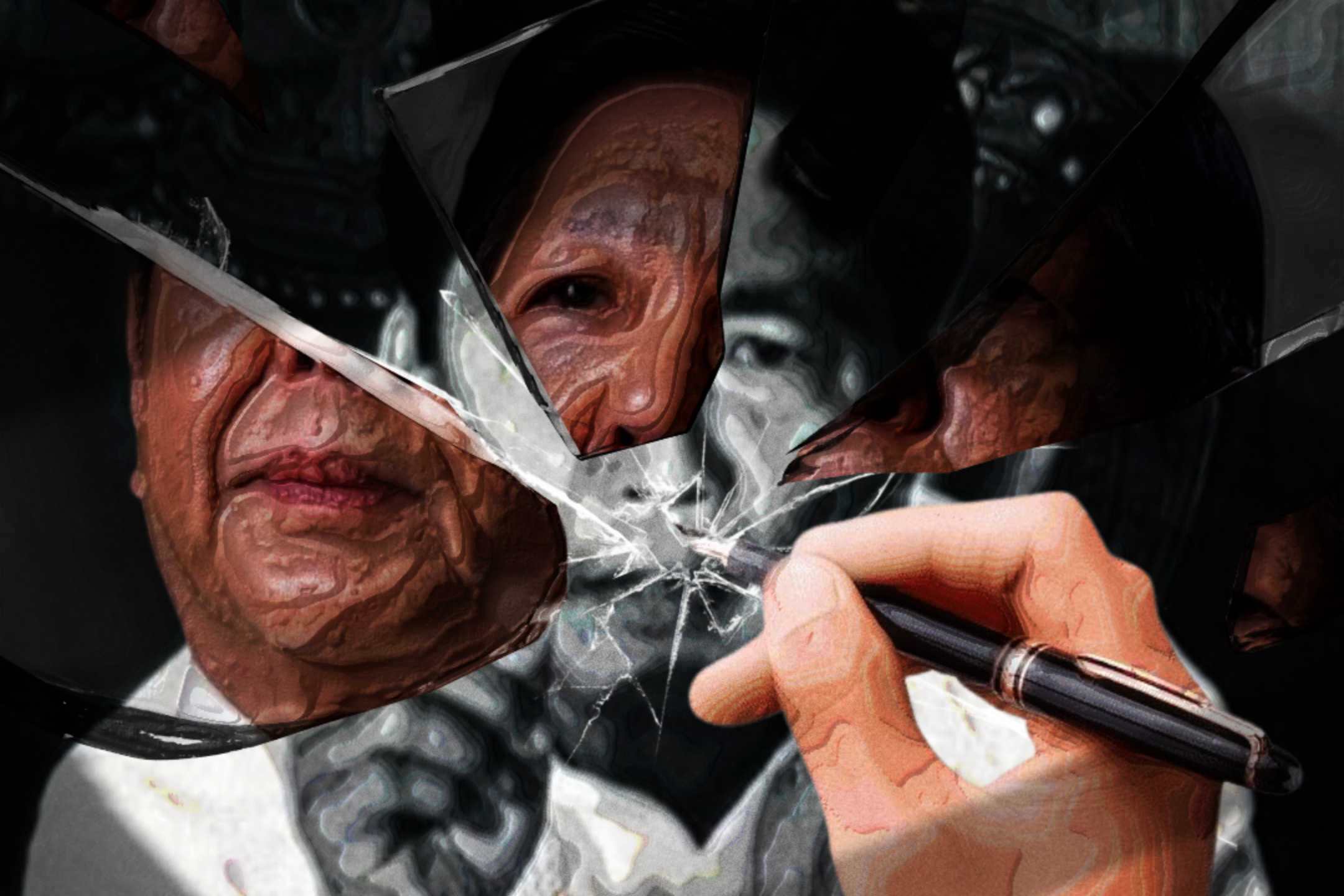
Fifty-four years ago, Ferdinand Marcos Sr. plunged the Philippines into one of its darkest chapters of its history. Newspapers were shut down, journalists were arrested, and information was placed under state control. But amidst the darkness, the student press refused to stay silent and firmly resisted.
Philippine campus journalism and its culture of resistance were shaped by the student writers and revolutionaries like Liliosa Hilao and Philippine Collegian’s Abraham Sarmiento, who did more than just write. They organized, marched, went underground, and fought. They risked repression and persecution to document abuses, challenge power, and defend democracy and the people when the state sought to silence them.
That history matters because conditions that made such resistance necessary did not disappear overnight. Student journalists of today therefore don’t merely inherit a publication. We inherit a tradition forged through struggle, one that understands journalism as a responsibility to the people and the pursuit of truth.
However, if that is the lineage we, the student press of today, inherit, it is not the only one.
As the son sits in Malacañang, the shadow of his father’s regime looms over the country once more. The Philippines of 2026 is not the Philippines of the 1970s. But the return of the Marcos name to power cannot be divorced from its bloodied history of dictatorship and culture of repression that sought to silence the media and the press.
The danger lies not in arbitrarily claiming that 1972 has somehow returned or that history simply repeats itself. The danger lies in forgetting the conditions that the dictatorship exposed: that repression thrives when the press are silenced, dissent is criminalized, and power escapes accountability. It also lies in the assumption that the fall of Marcos Sr. through the People Power Revolution and restoration of democratic institutions marked the triumph of genuine democracy and press freedom.
Pagbutlak asserts that the shadow has never truly left and is not simply the return of a surname. It is the continuing persistence of a culture of impunity and conditions that allow power to silence dissent and evade scrutiny.
Fifty-four years later, here in the Visayas, the consequences of that system are not distant history. Community journalists such as Frenchie Mae Cumpio and RJ Ledesma remind us that the dangers faced by the chroniclers of truth and champions of the masses who document the people’s struggles did not end with Martial Law. One remains unjustly imprisoned amid what human rights groups have denounced as politically motivated and trumped-up fabricated charges; the other was slain by state forces during an operation amid longstanding land struggles between peasants and landlords.
As 256 cases of attacks against the press were recorded under Marcos Jr.’s regime, with 165 individuals illegally arrested during his first six months in office, Cumpio and Ledesma’s cases belong to a harrowing present where journalism continues to carry a price—be it liberty, freedom, or one’s own life.
Even the corruption scandals and policies confronting the country today carry traces of the same order and father-son continuity. From anomalous infrastructure spending and ghost flood control projects to efforts to position the country within imperialist supply chains such as the Pax Silica, Marcos Jr. proved that he truly is his father’s son. His father’s massive infrastructure and public-work programs were emblematic of his regime’s edifice complex, modelling the country to a grand construction site and turning the exploitation of the country’s resources into symbols of supposed national progress. Decades later, with the same surname in the seat of power, we are still left asking where the public money goes, who benefits from the development, and who pays when these projects fail.
And in this persistence of corruption and repression, the student press remains sharper than ever, never forgetting the history that birthed our freedom to write nor the history that exposed a culture of oppression that continues to threaten that same exact freedom.
The father may have tried to silence the press. The son may have inherited his shadow. But the press inherits the courage of those who refused to be silenced in the first place. And in the pages we write today, we inherit their unfinished struggle.
Because the dictatorship may have ended, but its shadows remain. And so the press must remain where it has always belonged: to the people and in the way of power.




Leave a Reply